When we planned our trip to northern Peru, Cajamarca and Chachapoyas were on our list. Since we were planning to go overland by bus, stopping in Trujillo made sense to me. It broke up the long journey from Lima, and when I started looking into what there was to see, I came across Chan Chan. An enormous ancient city built by the Chimú, made from adobe rather than the stone you see at so many other archaeological sites in Peru. It is also a UNESCO World Heritage Site, so it sounded like a pretty good reason to add Trujillo to our route.
So we took a day bus from Lima to Trujillo and added Chan Chan to our trip. And I’m glad we did. It felt very different from the other ruins you see in the Andean regions of Peru. You walk between the large earthen walls and through the different sections of the site, and you start to get an idea of how large the city once was. If you’re travelling to Trujillo, I think Chan Chan is a must-visit, especially if you want to see a completely different side of Peru’s pre-Inca history.
Chan Chan at a Glance
Chan Chan: Quick Facts
- Location: Northern coast of Peru, near Trujillo
- Type: Archaeological complex
- Culture: Chimú
- Altitude: About 20–30 m above sea level
- Main construction: Adobe and earth
- UNESCO status: World Heritage Site since 1986
- Time needed: Around 2–3 hours
- Entrance fee: S/10
- Best for: History, archaeology and pre-Inca Peru
Chan Chan was the ancient capital of the Chimú Kingdom, on Peru’s northern coast near Trujillo. The city developed between about 900 and 1470 AD and became the largest pre-Columbian city built from earth or adobe in the Americas.
At its height, it covered around 20 square kilometres, although the main monumental area you visit today is much smaller. I got a better idea of just how big it was on the way there. Our taxi driver was very chatty, and as we drove through the sandy areas outside Trujillo, he pointed out that we were already passing through the wider Chan Chan area.
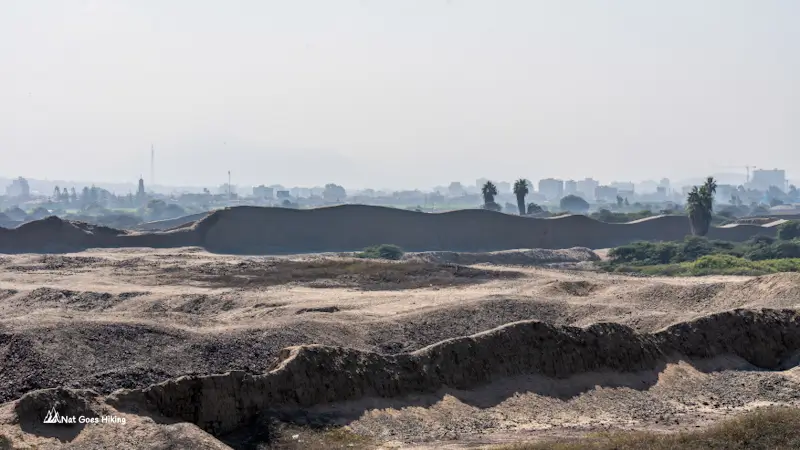
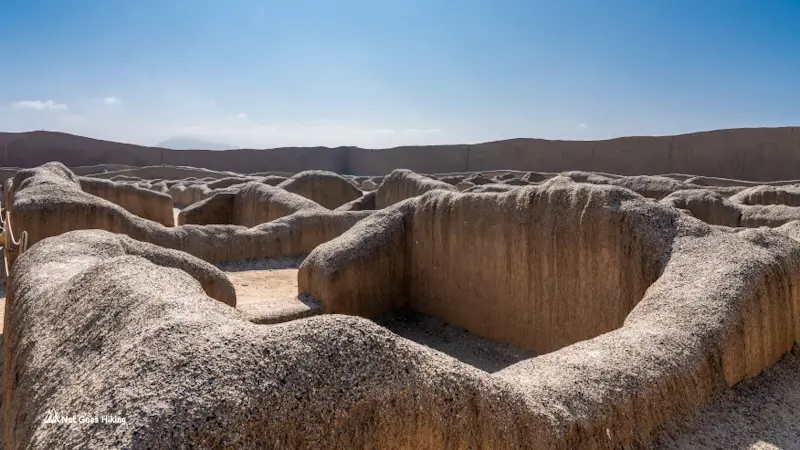
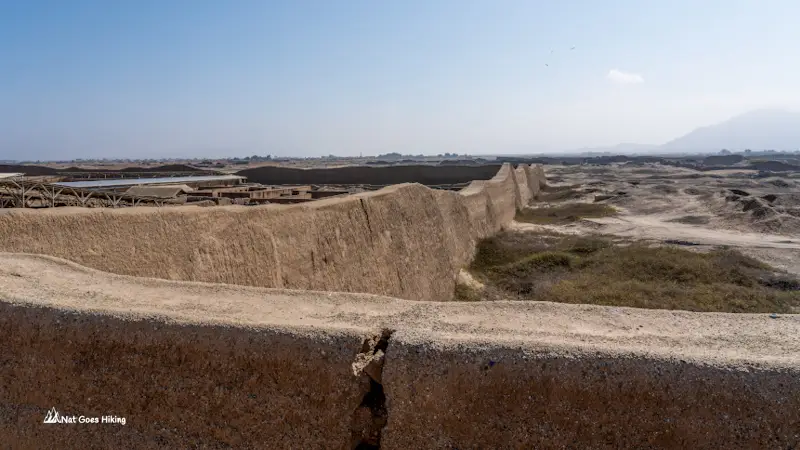
The dry coastal setting is part of what makes this archaeological site feel so different from the Inca ruins in the Andes. There are no steep mountain slopes here. Instead, huge adobe walls rise out of the coastal desert landscape. The archaeological complex includes large walled compounds, palaces, plazas, and other structures.
Chan Chan is a UNESCO World Heritage Site and is also on UNESCO’s List of World Heritage in Danger. Its adobe structures are vulnerable to rain, erosion, and extreme weather, including El Niño events. The monumental area you visit today is only one part of what was once a much larger city.
Can You Visit Chan Chan Without a Tour?
Chan Chan is easy to visit independently. You can get there by public transport or by taxi. Read below for how to get there by bus. Also, you can hire guides at the entrance if you would like to learn more about the site, but don’t want to come in a tour group.
There are also tours available from Trujillo, but compared with other destinations in Peru, I didn’t see that many tour agencies. We saw several on Jirón Francisco Pizarro advertising Chan Chan tours, often combined with a visit to Huanchaco. You can expect to pay around S/35–50 for a group tour. You can also find tours combining Chan Chan, Huanchaco and Huacas del Sol y de la Luna – the places I’d consider essential for a first visit to Trujillo.
How to Get to Chan Chan from Trujillo
You can get to Chan Chan from Trujillo by public transport. One option is to catch a local bus or combi towards Huanchaco near Mercado Mayorista (Main Market) – don’t confuse it with Mercado Central. The buses leave from Avenida José María Eguren and should have a big sign saying “Huanchaco”. Ask the driver to drop you off at the turn-off for Chan Chan. There is a big blue sign marking the turn-off.
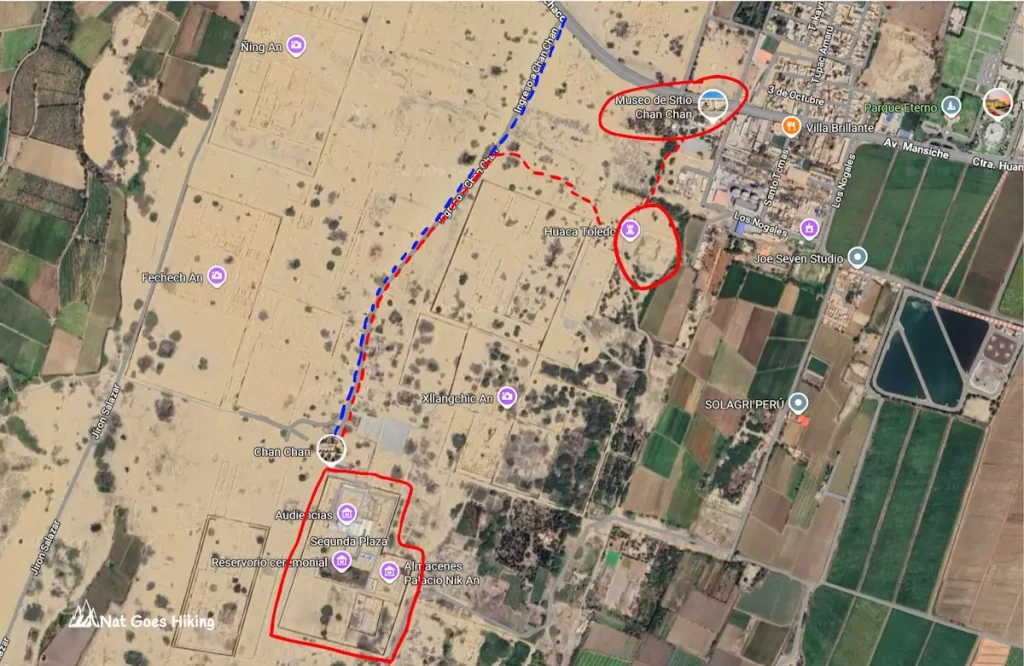
Expect to pay S/2–2.50. From the main road, you’ll need to walk about 1.5 km to the entrance along an unsealed road. On the map below, it is a blue dotted line.
We decided to take a taxi instead. It cost us around S/10, and the driver took us all the way to the entrance, so we didn’t have to walk the 1.5 km along the unsealed road.
Chan Chan: My Experience of Visiting
Exploring Nik An
The taxi dropped us off at the entrance to the archaeological site. We bought our tickets (S/10) and started exploring.
At the entrance, you may see guides offering their services, but we decided to explore the site at our own pace.
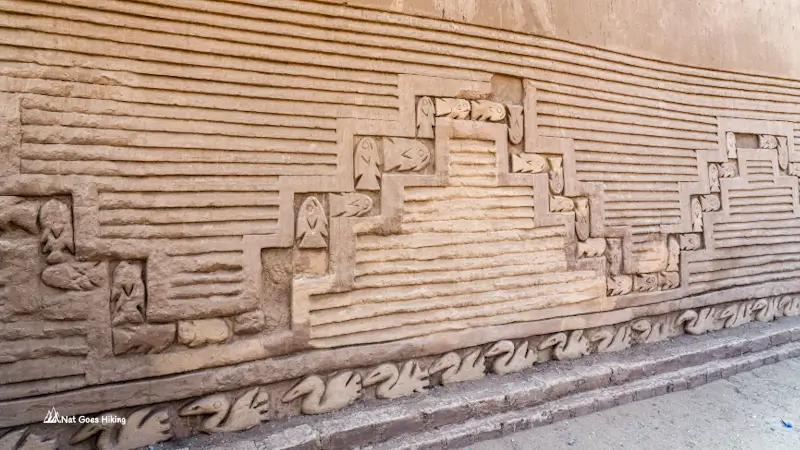
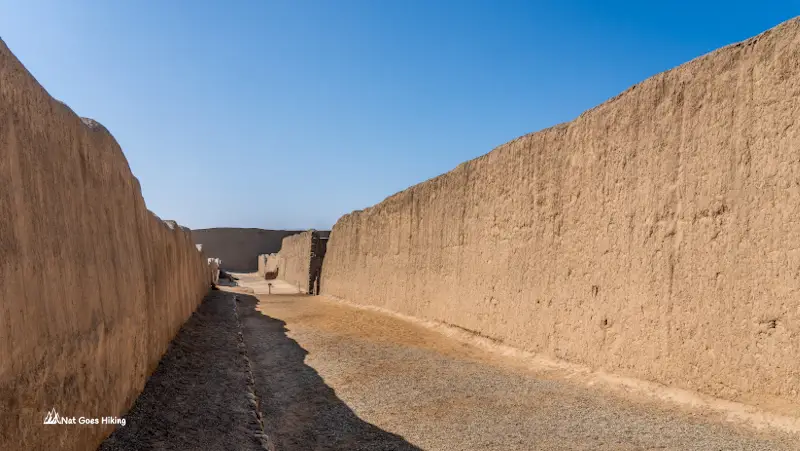
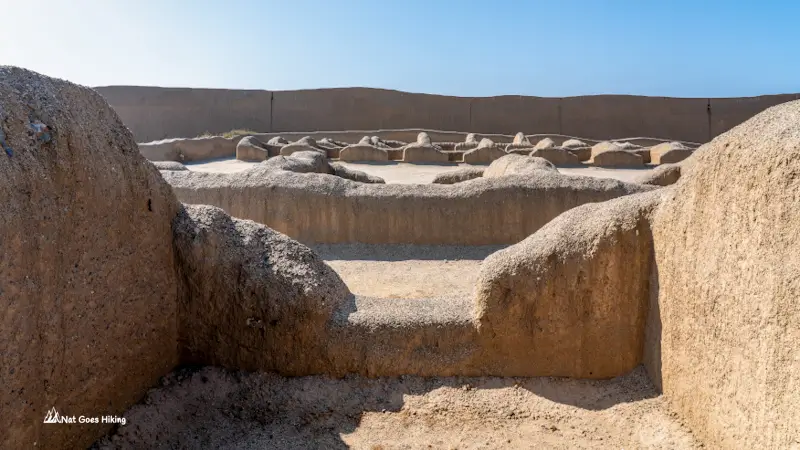
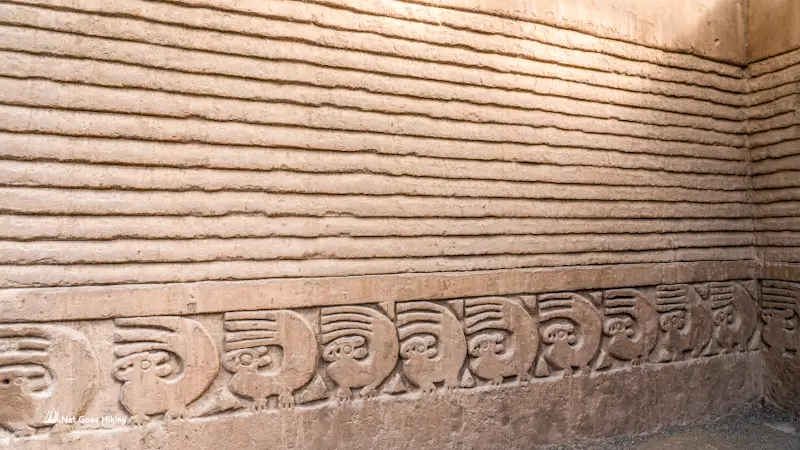
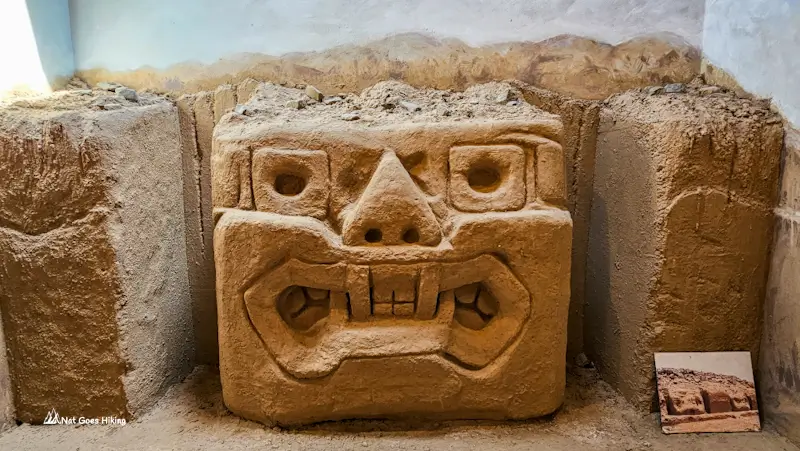
The first thing that catches your attention is the huge adobe walls. They are covered with geometric patterns and carvings of fish, birds, and other animals. Some sections have roofs over them, which makes sense when you see what the coastal weather can do to adobe.
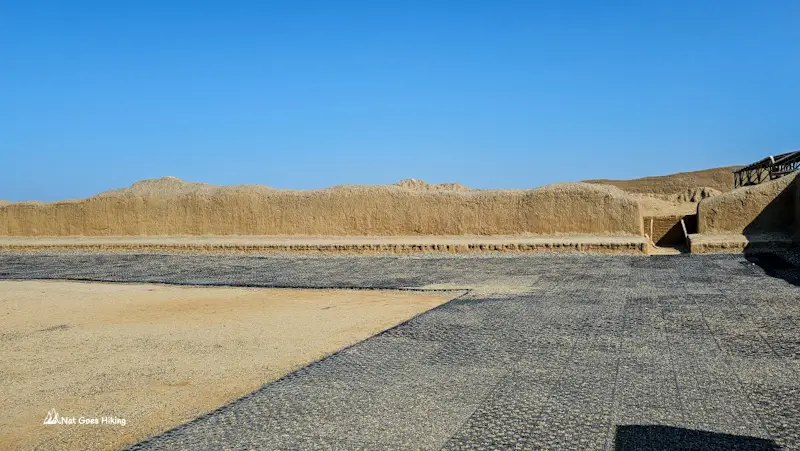
Walking around the ruins, we kept thinking about how different this felt from the stone ruins we’d seen elsewhere in Peru. There was no mountain scenery, no huge stone blocks fitted together. Just this enormous adobe city sitting in the dry coastal landscape.
The site is much bigger than what you actually get to explore. You can see ruins continuing beyond the area open to visitors. The ancient city covered around 20 sq km. According to UNESCO it contains nine large walled rectangular complexes described as citadels or palaces, though only Nik An Palace is open to visitors.
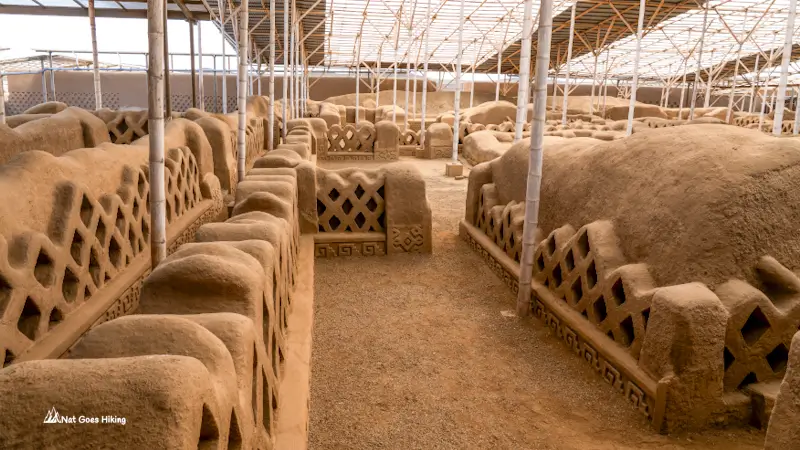
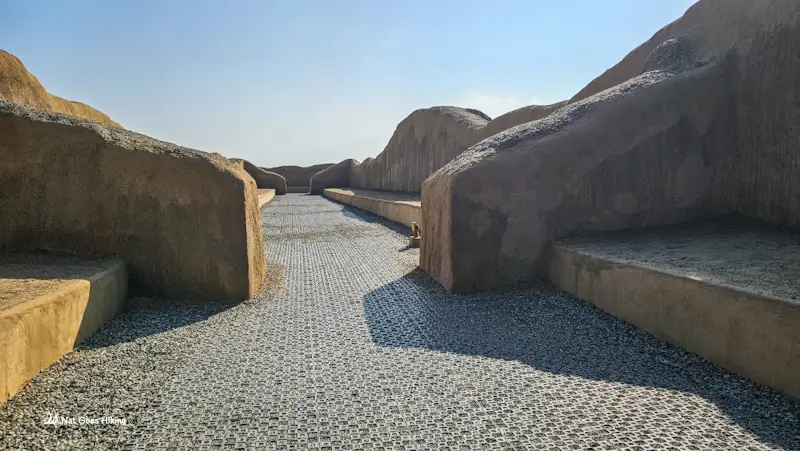
Inside Nik An, we walked through a series of courtyards, passages and open spaces surrounded by high walls. Some of the walls are covered with geometric patterns and reliefs of fish, birds and other animals.
We explored Nik An for a little over an hour. For us, that was enough time to see the complex without feeling rushed.
Huaca Toledo
After Nik An, we walked to Huaca Toledo. Huaca is a Quechua word used in Peru for a sacred or ceremonial place, structure, or object.
Huaca Toledo is located outside the Nik An area, so we had to walk back along the same road for about 1 km and then turn right. I marked this route with a red dotted line on the map above.
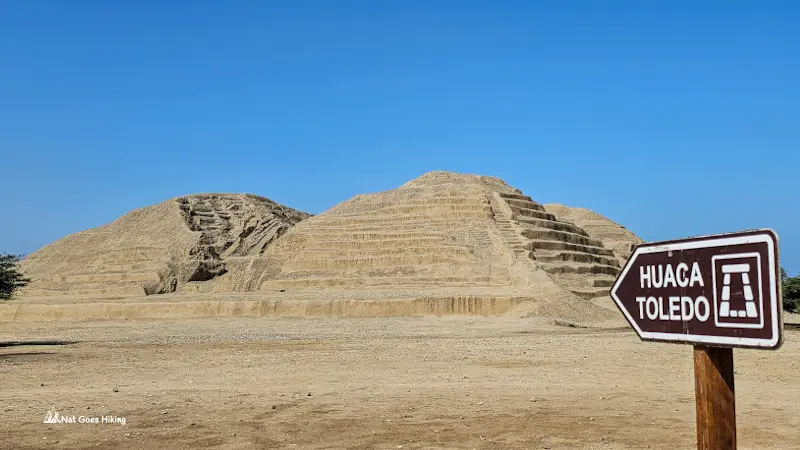
Huaca Toledo looks quite different from Nik An. It has a large stepped, pyramidal shape and rises more than 20 metres high. Unlike the walled compounds, it isn’t a palace or citadel but a separate pyramid-like structure.
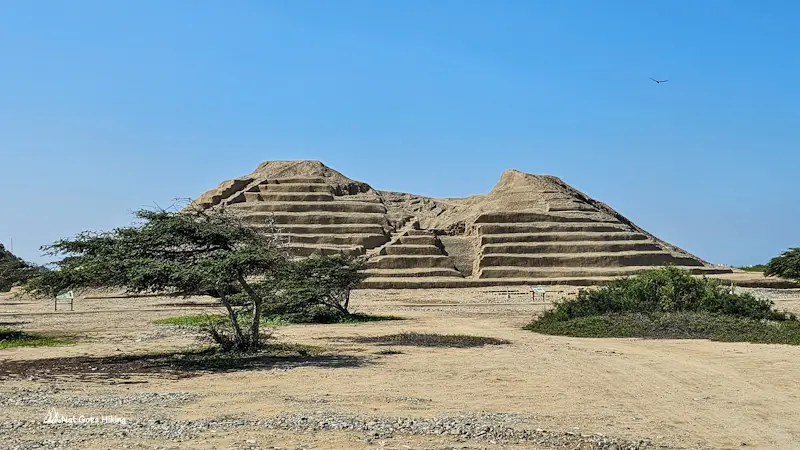
Its construction is also unusual. The core contains stone, earth and gravel, covered with adobe and rammed earth. The stepped sides were plastered, but they don’t have the elaborate reliefs you see on the walls of Nik An.
Looters and centuries of coastal weather have chewed into it pretty badly. Archaeologists believe Huaca Toledo was used for public ceremonies, but there is still a lot we don’t know about its exact purpose.
Museum
After Huaca Toledo, we headed to the museum, which is just a short walk away. It isn’t huge, but it helped put what we’d just seen into context. There’s a map showing the full extent of Chan Chan, and a large model of the ancient city showing the walled compounds and streets.
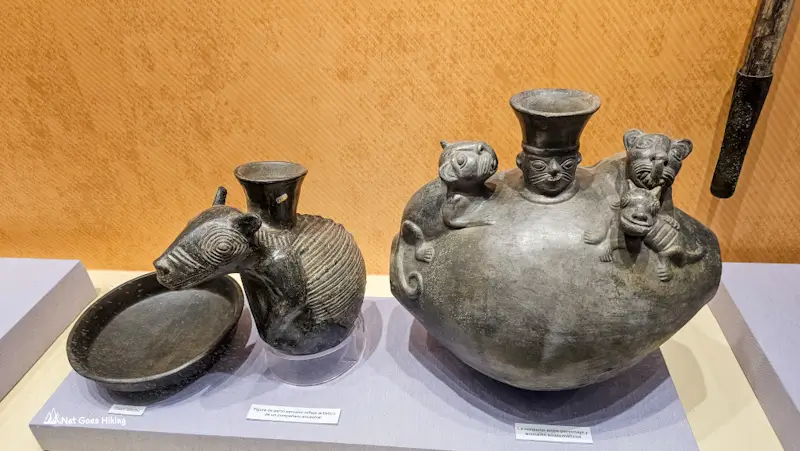
You will also see Chimú ceramics, woodwork, textiles, metal objects, and other archaeological artefacts. The museum visit is included in the ticket. The displays have good explanation signs, which make it easy to understand what you’re looking at.
It’s a good addition and helped us understand more about the Chimú civilisation.
Chan Chan Practical Tips
Entrance Fee
The entrance ticket is very affordable. As of 2026, the adult ticket for Peruvian and foreign adults is S/10. It is an integrated ticket rather than just an entrance to one part of the ruins. It includes the Nik An complex, Museum, Huaca Arco Iris and Huaca La Esmeralda.
The reduced rate is S/5 for university students and S/1 for schoolchildren.
Opening Hours
Opening hours are 9:00 am to 4:00 pm Tuesday to Saturday, and 10:00 am to 4:00 pm on Sunday. It is closed on Mondays.
If you want to see more than just the main palace, don’t leave it too late. The different sites covered by the ticket aren’t all right next to each other, and Nik An is the main attraction. If you’re short on time, this is the one I’d prioritise.

How long do you need at Chan Chan?
I’d allow about 2–3 hours. In total, we didn’t rush through and spent about 2 hours exploring Nik An, Huaca Toledo and the museum, including walking time.
Should you hire a guide?
This is one place where I think a guide can make a real difference. The decorated walls are impressive even when you don’t know what you’re looking at, but there isn’t a huge amount of information explaining the details as you walk around.
You may find guides offering their services around the entrance. If you’re interested in the history and archaeology rather than just seeing the ruins, I’d consider hiring one. We decided not to hire a guide and to explore the site at our own pace.
Take water and sun protection
The site is very exposed. There isn’t much shade, and the northern Peruvian sun can be strong even when it doesn’t feel particularly hot.
Bring water, a hat and sunscreen. I’d also wear proper shoes rather than sandals if you plan to spend a few hours exploring.
Is Chan Chan Worth Adding to Your Peru Itinerary?
If this is your first trip to Peru and you’re trying to fit in the country’s biggest highlights, I probably wouldn’t put Trujillo and Chan Chan at the top of the list. There is just so much to see in Peru, and places like Cusco, Machu Picchu, the Sacred Valley and the mountains around Huaraz are likely to be higher on your list.
But if you’re planning to explore northern Peru, I think it’s absolutely worth adding.
What I liked most was how different it felt from the Inca ruins around Cusco. There were no mountains or huge stone walls here. Instead, we were walking through an enormous ancient city made from adobe, surrounded by the dry coastal landscape.
Another thing I liked about travelling in northern Peru was that we saw far fewer foreign tourists than in places like Cusco or the Sacred Valley. Trujillo and Chan Chan don’t get anywhere near the same international visitor numbers, which made the experience feel quite different. You can actually spend time looking around without feeling like you’re following a crowd.
So, is it worth visiting? For me, yes. I wouldn’t fly to Peru specifically for Chan Chan, but if you’re planning to explore northern Peru, I’d definitely include it.

Other places to visit in Trujillo
Huacas del Sol y de la Luna
If you have time for another archaeological site, I’d put Huaca de la Luna near the top of the list. The two huacas are close to each other and were both part of the Moche capital, but they served different purposes. Huaca de la Luna was a ceremonial complex, with huge adobe structures, colourful murals and carved reliefs.
Huaca del Sol, on the other hand, was used by the Moche elite for political and administrative activities. From outside, it looks like a huge, almost solid adobe structure, but archaeologists have found rooms, platforms and other spaces within it.
You can visit Huaca de la Luna, while Huaca del Sol is not currently open to visitors. You can, however, see the enormous structure from outside.
Huanchaco
Huanchaco is a good one to add if you want something completely different from archaeological sites. It’s a coastal town about 13 km from Trujillo, known for its traditional caballitos de totora, the small reed boats still used by local fishermen. Huanchaco is also popular with surfers. We had a relaxing walk along the beach, watched the boats coming in, and enjoyed ceviche at one of the restaurants.
I think it’s worth adding to a Trujillo itinerary if you want to get a glimpse of the local coastal culture.
Trujillo Historic Centre
I’d also leave a few hours for Trujillo’s historic centre. Start around Plaza de Armas and wander through the streets around Jirón Pizarro, where you’ll find colourful colonial buildings, churches and the city’s famous wooden balconies. It isn’t the reason I came to Trujillo, but after spending time among the ruins, I enjoyed seeing this side of the city.
El Brujo and the Señora de Cao
If you have more time in the area, El Brujo Archaeological Complex is another interesting option, about 60 km north of Trujillo. The main attraction is Huaca Cao Viejo and the Señora de Cao, a Moche ruler whose tomb was discovered here.
Is Trujillo safe?
There’s some mixed information online about safety in Trujillo. When we were there, it did feel like Trujillo required a bit more caution than some of Peru’s more touristy destinations, but we had no problems during our stay. We took both taxis and local buses and walked around the historic centre. We didn’t walk around after dark, though. The hotel staff also told us not to walk around at night and said that taking Uber or inDrive was a safer option.
Related Posts
Want more inspiration for travel in Northern Peru? Check out these posts:
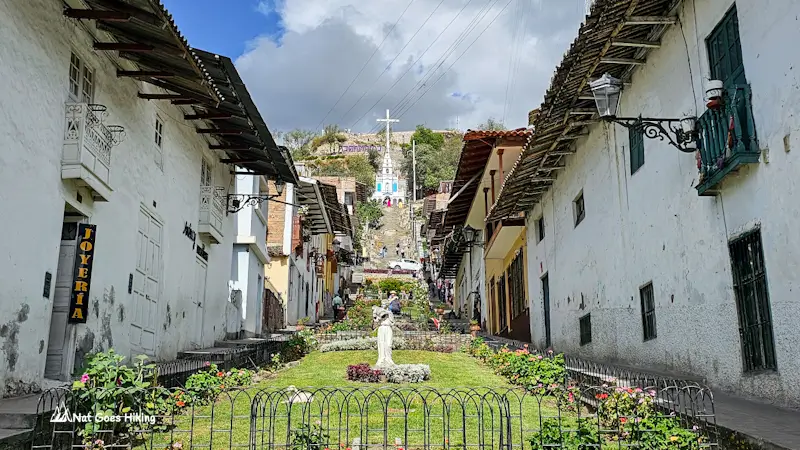
Planning a trip to Cajamarca? Discover the best places to visit, tips on transport and booking tours, and where to stay based on my 2025 trip.
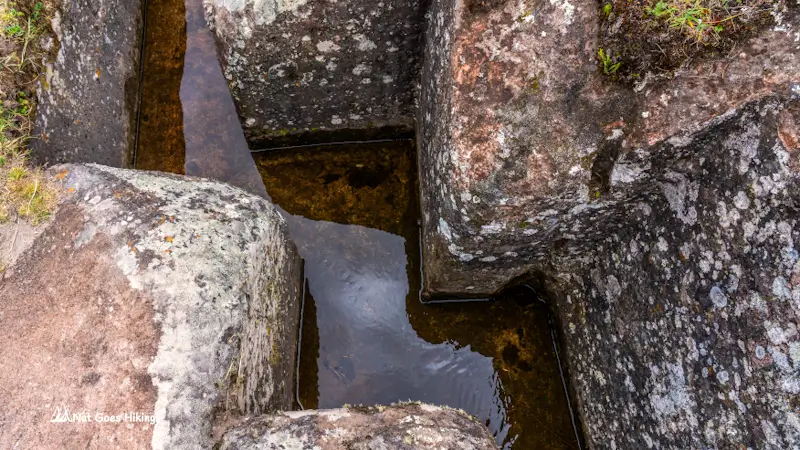
Planning to visit Cumbe Mayo from Cajamarca? In this post I share how to visit Cumbe Mayo, costs, what to expect and my experience at the site.
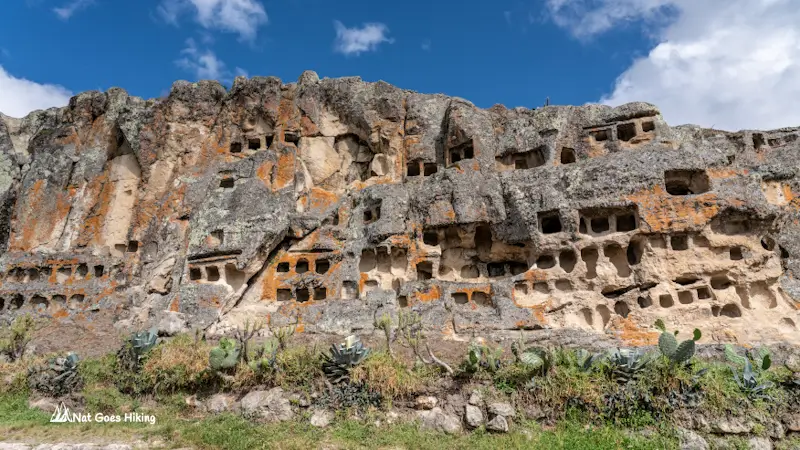
Find out how to visit Ventanillas de Otuzco without a tour, including how to get there by colectivo from Cajamarca, costs, what to expect, and more.
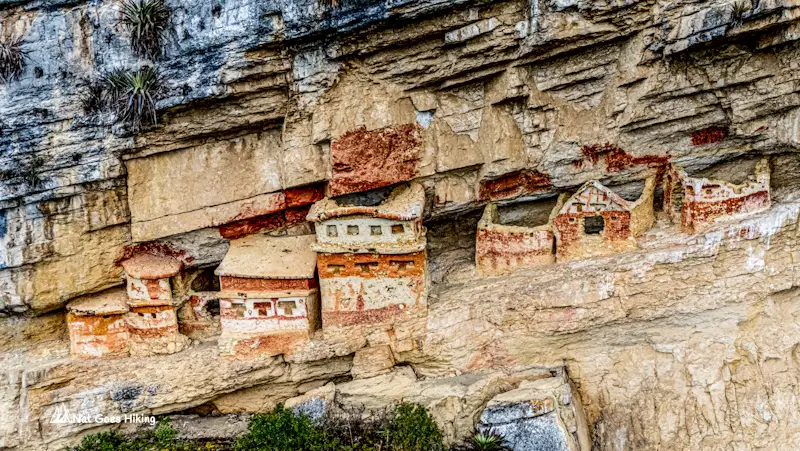
Planning a Chachapoyas itinerary? Here’s my 3-6 day guide to Kuelap, Gocta, Karajia, Revash and Leymebamba, with transport, tours, hotels and practical tips.
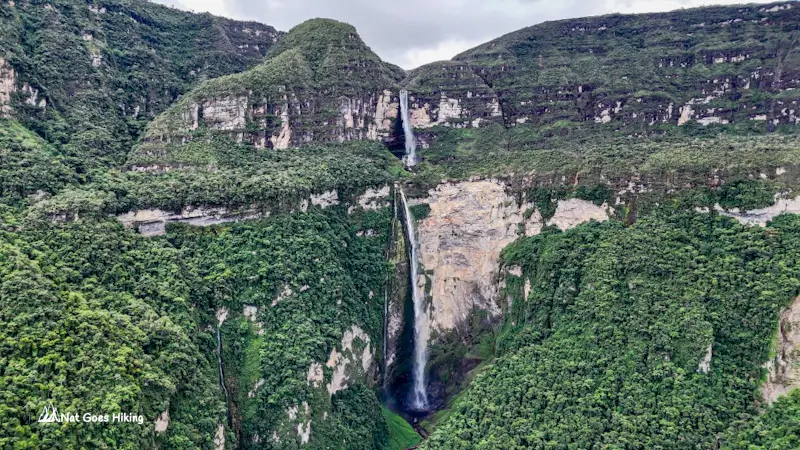
Planning the Gocta Waterfall hike? Learn about the trail, entrance fee, tour vs independent hike, costs, best time to visit and practical tips based on our July 2025 visit.
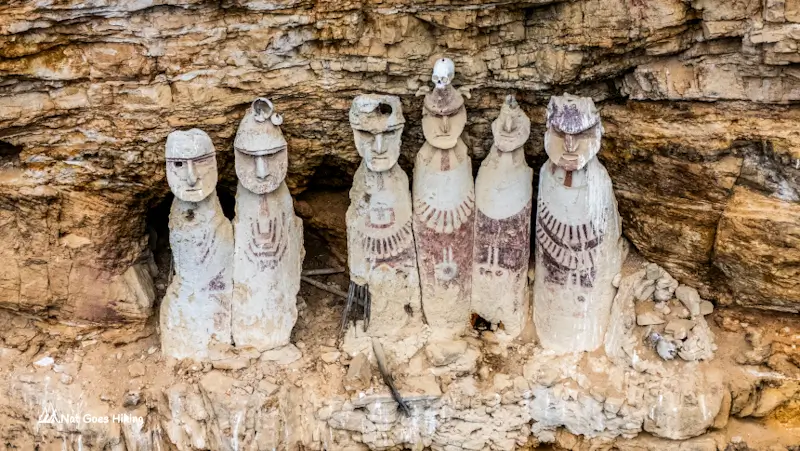
Discover Karajia Sarcophagi in Peru without a tour. My guide covers how to get there by public transport, costs, what to expect, and tips for visiting.

Discover the Revash Mausoleums and Leymebamba Museum in Peru. Read my first-hand guide with hiking, tours vs independent, and practical tips.

Planning a trip to Kuelap? My guide covers visiting Kuelap without a tour, cable car details, tickets, transport from Chachapoyas and what to expect there.