I came to Chachapoyas expecting Kuelap to be the highlight. It was actually the reason I travelled all the way to northern Peru in the first place. I’d planned the whole trip around finally seeing this ancient fortress.
Kuelap was impressive, but I’d built up so much in my mind that it never quite lived up to my own expectations. It wasn’t the highlight of my trip in the end. What surprised me was that the places I knew almost nothing about ended up leaving the biggest impression. Those places are the Karajia Sarcophagi and the Revash Mausoleums. They felt quieter, more unusual and mysterious, and, somehow, more memorable.
This Chachapoyas travel guide brings together everything I learned while exploring the region during my trip in 2025. You’ll find the best things to do in Chachapoyas, suggested 3-, 4- and 6-day itineraries, transport tips, where to stay, the best time to visit, and my honest thoughts on which places are genuinely worth your time. If you’re planning a trip to Chachapoyas, I hope this guide saves you hours of research and helps you make the most of your visit.
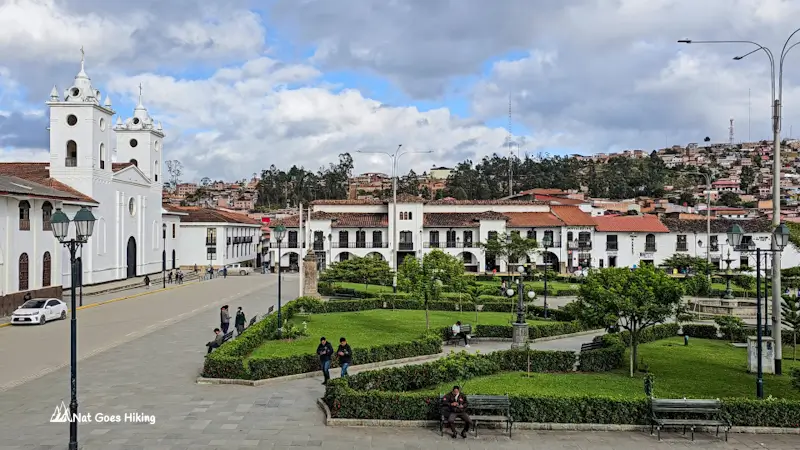
Is Chachapoyas worth visiting?
Chachapoyas is not the easiest place to add to a Peru itinerary. It is far from the classic route that connects Lima, Cusco, Arequipa, and the Titicaca region.
But that distance is exactly what makes it special. For international travellers, Chachapoyas is still very much off the beaten path. Most of the other tourists we met were Peruvian travellers. After spending time in places like Cusco and the Sacred Valley, it was refreshing to visit somewhere that did not feel like it was built around international tourism.
Most travellers come to Chachapoyas for Kuelap Fortress and Gocta Waterfall. Kuelap is the attraction that made the region famous. Gocta Waterfall is another highlight, a spectacular waterfall in the cloud forest. But it has much more to offer beyond these two famous places.
If you are looking for a Peru itinerary beyond the classic southern circuit, Chachapoyas offers a completely different experience. With a well-planned Chachapoyas itinerary, you can combine ancient ruins, cloud forest hikes, waterfalls and fascinating local culture in a region that many international travellers overlook.
Suggested Chachapoyas Itineraries
The itineraries below assume you have full days available for sightseeing. On your arrival day, check in at a hotel, explore Chachapoyas’ historic centre, and, if you are going to book any tours, visit tour companies. If you have any time left, I recommend going to Sonche Canyon, as a half day is enough. Read here how to get there.
Chachapoyas Itineraries
Day 2: Gocta Waterfall
Day 3: Karajia + Quiocta Cave*
Day 4: Revash + Leymebamba Museum*
Best Things to Do in Chachapoyas
If you’re wondering what to include in a Chachapoyas itinerary, I’d start with these five places. They were the highlights of my trip and give you a good mix of Chachapoya archaeology, mountain scenery, waterfalls and a fascinating look at the region’s history.

Explore Kuelap Fortress
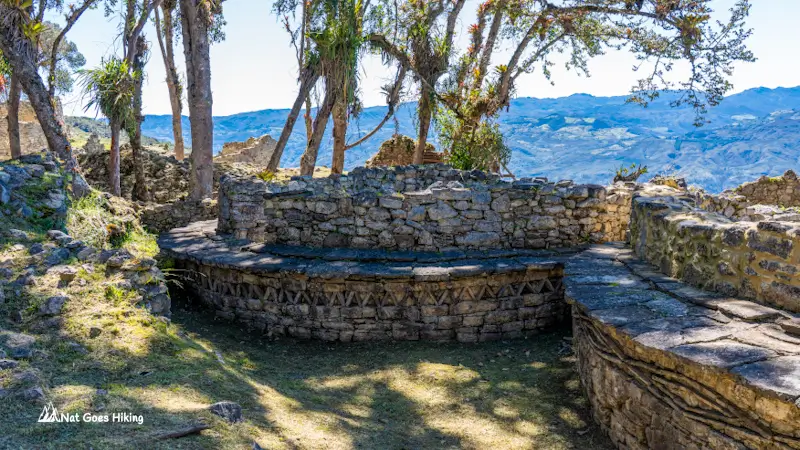
Kuelap was the reason I came to Chachapoyas in the first place, and it’s no doubt a must-visit destination.
Kuelap is a huge fortified settlement at around 3,000 metres above sea level, built by the Chachapoya people. It has massive stone walls, narrow entrances, and unusual circular structures, which make it quite different from the Inca sites around Cusco. According to the Ministry of Culture of Peru, although the site was occupied over a much longer period, most of the structures you see today date from roughly 900 to 1470.

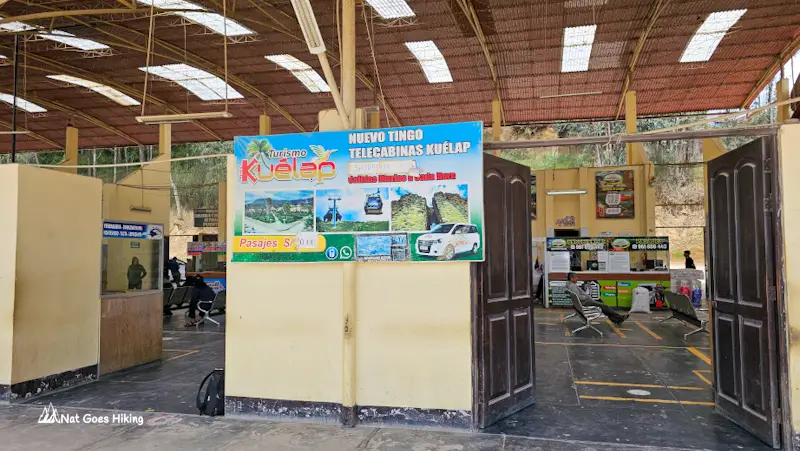
The ride on the Teleférico de Kuélap (Kuelap cable car) was also an amazing experience.
Access and visitor circuits at Kuelap can change as restoration work continues, so check the latest information before your visit.
For practical tips on how to visit Kuelap without a tour, read my complete guide: Kuelap Without a Tour: Complete Visitor Guide.
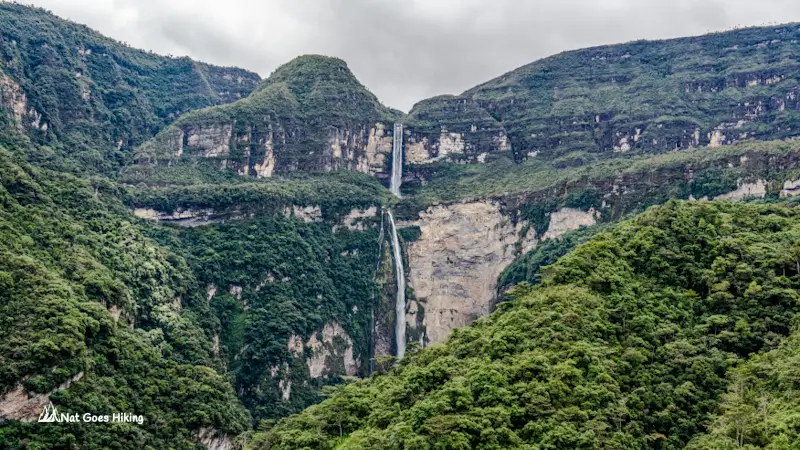
Hike to Gocta Waterfall
Gocta is probably the best-known natural attraction and the second most popular destination in the Chachapoyas region. The waterfall has a total drop of 771 metres, divided into two cascades. You can hike to both, but most people choose the easier option and walk to the base of the lower cascade.
I really enjoyed the hike through the lush cloud forest and the views, which were very different from the dry, high-altitude scenery found in many other parts of Peru.
For practical tips on how to visit Gocta, read my guide: Gocta Waterfall Hike Guide: Tour vs Independent
Visit Karajia Sarcophagi
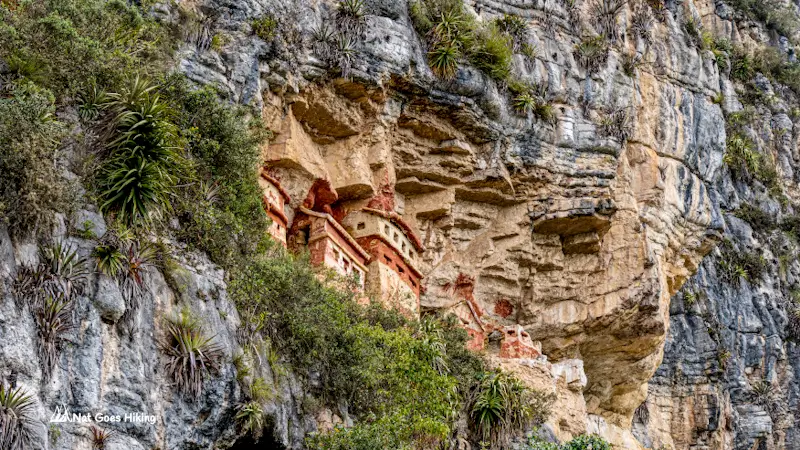
After all the travelling I’ve done, it takes a fair bit to surprise me these days. But Karajia Sarcophagi are so unusual, they managed to surprise me.
The sarcophagi stand high on a limestone cliff, and the most unusual thing about them is their human-like shape. I don’t think you can find anything quite like this anywhere else in the world. Karajia isn’t as famous internationally as Kuelap, but for me, it was much more memorable.
It’s straightforward to visit Karajia without a tour. For practical tips on how to visit Karajia without a tour, read my complete guide: Karajia Sarcophagi Without a Tour: Complete Guide

Visit Revash Mausoleums
I hadn’t heard about Revash Mausoleums before coming to Chachapoyas. Rows of tiny houses clinging to a limestone cliff felt like an Indiana Jones set.
You can reach Revash from the small village of San Bartolo; it’s a 2 km hike from the village. The site is around 80 km from Chachapoyas, so getting there takes much longer than visiting Karajia or Gocta.

If you’re short on time, I’d recommend combining Revash Mausoleums and Leymebamba Museum on an organised tour. We did this ourselves, and it made much more sense than trying to fit both places into one day or split the visit into 2 days using public transport.
If you’re interested in history and archaeology, don’t stop at Kuelap. Revash and Karajia give you a completely different glimpse into Chachapoya civilisation.
Read my guide to visiting Revash Mausoleums and Leymebamba Museum: Revash Mausoleums and Leymebamba Museum: Complete Guide
Visit Leymebamba Museum
If you want to understand more about the people who built the sites around Chachapoyas, the Leymebamba Museum is well worth adding to your Chachapoyas itinerary. Most tours combine the Revash Mausoleums with a visit to the Leymebamba Museum.
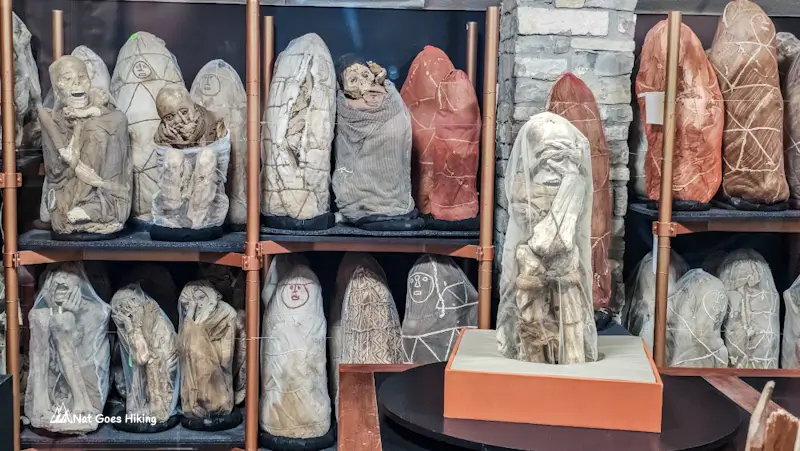
The museum houses an important collection of Chachapoya artefacts, including hundreds of objects recovered from the Laguna de los Cóndores archaeological site, including more than 200 mummies, textiles, ceramics and other funerary objects.
Explore Chachapoyas’ Historic Centre
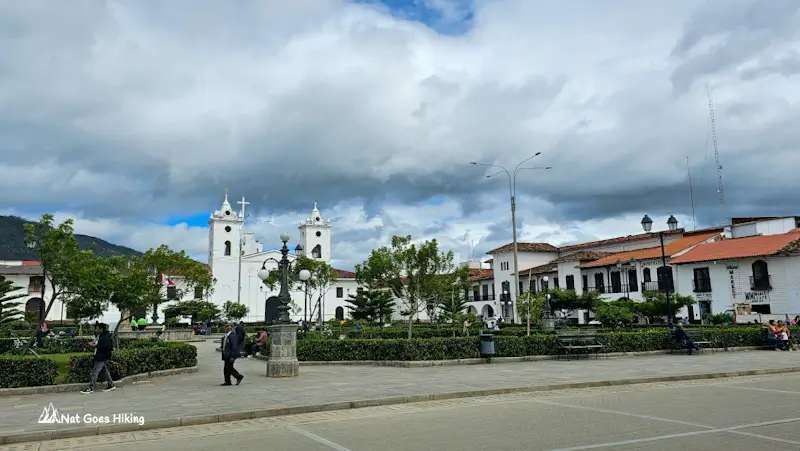
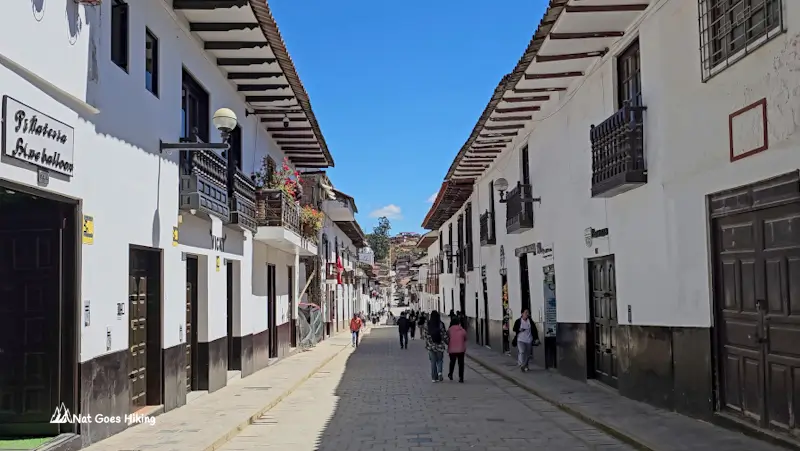
Don’t overlook Chachapoyas itself. The city centre is small and easy to explore on foot, with white colonial buildings, balconies, cobbled streets and the Main Plaza. A couple of hours is enough to walk around the historic centre, have a coffee, and take in the architecture.
More Things to Do in Chachapoyas
These are the places I would prioritise on a first trip, but there is plenty more to see if you have extra time. Below are some of the other things to do in Chachapoyas that are worth considering.
Yumbilla Waterfall
If you have more time in Chachapoyas, consider adding Yumbilla Waterfall to your itinerary. At around 895 m high, it is actually taller than the much better-known Gocta Waterfall (771 m), which is included in most Chachapoyas itineraries.
Yumbilla receives far less attention and remains something of a hidden gem in the Chachapoyas region. If you’re looking to get further off the beaten path, it is a great alternative.
Yumbilla Waterfall is located near the small town of Cuispes, about 63 km from Chachapoyas. To get there, take a colectivo from Chachapoyas to Pedro Ruiz, then continue to Cuispes by mototaxi. From Cuispes, you’ll need to hike about 5.5 km through the cloud forest to reach the waterfall.
El Tigre Sarcophagi
The El Tigre Sarcophagi are another fascinating Chachapoya burial site, and this one is very much off the beaten path. You can’t visit the site without a guide, but you can still get to the village of San Jerónimo independently and arrange a guide there. Getting there isn’t straightforward without your own transport, though, so it’s best to either arrange private transport or join a tour.
Sonche Canyon
Sonche Canyon stretches for about 11 km and is almost 900 metres deep. It’s one of the easiest attractions to visit independently from Chachapoyas. It’s only 10 km away and can easily be reached by colectivo. To get there, catch a colectivo to the small town of Huancas from the corner of Avenida Aeropuerto and Avenida San Juan de la Frontera, a couple of blocks from the Main Plaza. The fare is S/5. The entrance fee is S/6.
Quiocta Cave
Quiocta Cave has several chambers filled with stalactites, stalagmites, and other impressive rock formations. You can also see red ochre rock paintings and archaeological remains, including human bones.
Getting to Quiocta Cave independently requires two changes. Take a colectivo from the Chachapoyas terminal to Luya, then change to a colectivo to Lámud. In Lámud, change again to a shared taxi to Chumblate. From there, it’s only a 5–10 minute walk to the cave.
The entrance fee is S/25 for foreigners and S/15 for Peruvians. Opening hours are from 8.30 am to 3.30 pm. The cave is closed on Tuesdays.
Quiocta Cave is a popular add-on to Karajia Sarcophagi tours, as the two sites are relatively close to each other. But if you’re visiting independently, you need to plan carefully and leave Chachapoyas early. If you visit Karajia first, return to Luya and take a colectivo from there to Lámud. In Lámud, you’ll need to transfer to a shared taxi to Chumblate. This journey can take some time, and the cave is open only until 3:30 pm.
Laguna de los Cóndores
Laguna de los Cóndores is probably the most ambitious option on this list. It’s a remote archaeological and natural site. Here, archaeologists found about 200 mummies in mausoleums built into the steep cliff face. These mummies are now conserved at the Leymebamba Museum.
Reaching Laguna de los Cóndores involves a multi-day trek from Leymebamba through beautiful cloud forest wilderness. If you like visiting truly remote places, this is probably one of the most interesting additions you could make to a longer Chachapoyas itinerary.
Getting Around the Chachapoyas Region
Public Transport
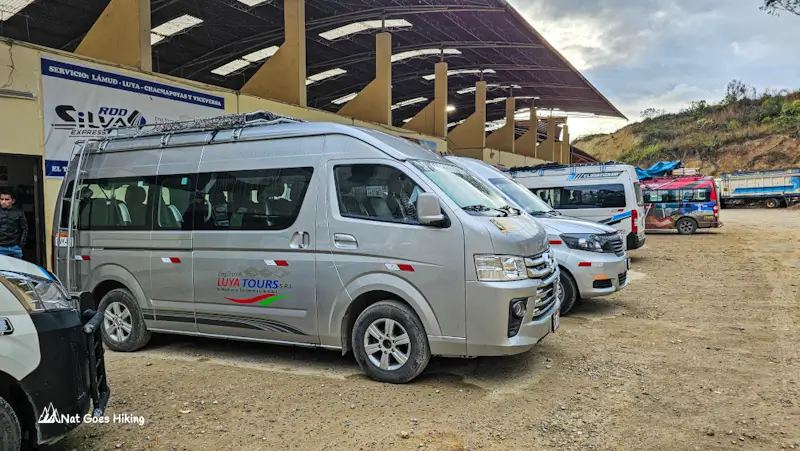
Colectivos are a cheap local way to travel between Chachapoyas and the surrounding towns. They depart from Chachapoyas Terminal Terrestre. A colectivo is usually a shared car or van. Some of them have a timetable, while others don’t.
If you’re travelling on a budget or simply prefer doing things independently, public transport is a great option. Some destinations, like Karajia sarcophagi, Kuelap, and Gocta Waterfall, are quite straightforward to visit independently by public transport, while Revash is trickier.
| Attraction | Getting there independently | How to get there independently |
|---|---|---|
| Gocta Waterfall |
Easy Colectivo + mototaxi |
How to get to Gocta Waterfall |
| Kuelap |
Easy Colectivo to cable car station |
How to get to Kuelap |
| Karajia Sarcophagi |
Easy 2 colectivos with a transfer in Luya |
How to get to Karajia Sarcophagi |
| Revash Mausoleums |
Harder – tour recommended if you’re short on time and want to visit Leymebamba Museum on the same day. Colectivo + mototaxi (tricky), or colectivo + 3 km walk (600 m elevation gain), or colectivo + 7 km walk (850 m elevation gain) |
How to get to Revash Mausoleums |
| Leymebamba Museum |
Easy, but tour recommended if you’re short on time and want to combine with Revash Mausoleums. Colectivo (direct) |
How to get to Leymebamba Museum |
Organised Tours in Chachapoyas
Most of the attractions in the Chachapoyas region can be reached by public transport, but in some cases buying a tour makes more sense, especially if you’re short of time.
Getting to some of them independently can involve several colectivos, mototaxis, and a fair bit of figuring things out. We took an organised tour to Revash and Leymebamba Museum, as it was much easier to visit both on the same day if you take a tour. If we went independently, we’d have had to split it over 2 days.
If you prefer having everything organised, there are several local agencies in Chachapoyas offering shared and private tours. I noticed at least three tour companies around the Main Plaza, and their prices were generally quite similar. However, one agency quoted us a price about 30% higher than the others, so it definitely makes sense to check a few agencies before booking.
When we chatted with the staff, they offered us even cheaper deals. We hadn’t asked for a discount. We had simply asked about the prices.
Popular tours like Gocta Waterfall and Karajia are easy to book a day in advance. However, Revash Mausoleums and Leymebamba Museum tours aren’t available every day. When we booked, only one tour was running that week. Only one tour company was able to confirm the trip, as they had enough people to go ahead with it.
From my experience, all tours from Chachapoyas include return transport, a guide, entrance fees, and lunch. Considering how affordable the tours are, I have no idea how they manage to make a profit.
How to Get to Chachapoyas
Getting to Chachapoyas by plane
The easiest and fastest way to get to Chachapoyas is by plane.
ATSA Airlines is currently the only airline operating direct flights between Lima and Chachapoyas. In 2026, there are daily flights, taking around 1 hour 30 min, with departure from Lima at 8:40 am and arrival in Chachapoyas at 10:10 am. Keep in mind that flight schedules and fares can change, so check the current timetable before booking.
The cheapest Basic fare, which includes only 5 kg of carry-on luggage, sells out faster. If you want to get the cheapest fare, it’s best to book a couple of months in advance.
We travelled to Chachapoyas by bus, but we decided to take a plane for the return trip. I booked the ticket only 6 days in advance, and by then, the cheapest Basic fare was gone. We paid $170 per person for the most expensive Plus fare.

Getting to Chachapoyas by road
Travelling by bus can be more affordable, but it is a very time-consuming way to get to Chachapoyas. You can catch a bus from Lima, Trujillo, Cajamarca, Tarapoto, and some other cities. Taking a bus makes sense if you want to visit other places along the way, such as Trujillo or Cajamarca.
Buses from Lima to Chachapoyas
Lima to Chachapoyas by bus is a very long trip, taking approximately 25–26 hours. Bus companies operating this route include Civa and Movil Bus. Fares range from S/130 to S/210 (~$38.50–$88), depending on the seat type.
I wouldn’t recommend taking the bus from Lima unless you have plenty of time and are travelling on a tight budget. Also, keep in mind that to save money, you’ll need to choose the cheapest ticket. The most expensive bus fare costs almost the same as the cheapest plane ticket.
Buses from Trujillo to Chachapoyas
Travelling by bus from Trujillo to Chachapoyas is a good option if you are already exploring northern Peru. The journey takes approximately 15.5 hours. Online, I only found Movil Bus operating this route. The fares range from S/110 to S/158 (~$46-$66.2), depending on the seat type.
There may be other bus companies operating this route, but I couldn’t find them online.
Buses from Tarapoto to Chachapoyas
If you’re travelling through northern Peru, you can also reach Chachapoyas from Tarapoto by bus. The journey takes around 8-9 hours. The fare is S/75.
This is a useful option if you’re planning to visit the Peruvian selva (jungle region). The journey takes you through some beautiful mountain scenery as you leave the tropical lowlands around Tarapoto and climb towards the Andes.
Buses from Cajamarca to Chachapoyas
Usually, when taking overland transport, I prefer to travel during the day to enjoy the scenery, so I was trying to find out if there were day buses from Cajamarca to Chachapoyas. We went to the Cajamarca bus station to find out, and we were told there’s only one bus. Our alternative plan was to take a colectivo from Cajamarca to Celendín, and change there to another one to Leymebamba, and from Leymebamba to Chachapoyas.
At the Cajamarca Terminal Terrestre, we had a chat with some local travellers who were also going to Chachapoyas, and they convinced us to take the night bus. According to them, taking a big bus was a safer choice than travelling by colectivos.
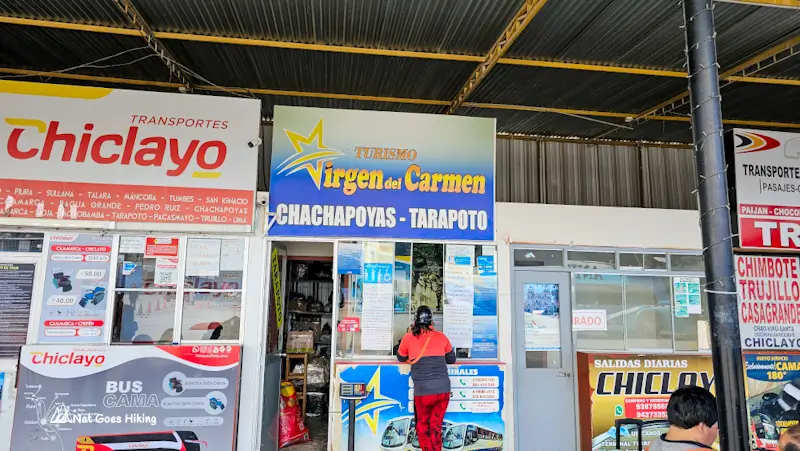
So we travelled from Cajamarca to Chachapoyas on an overnight bus. As of 2026, there is only one bus run by Turismo Virgen del Carmen, and there’s only an overnight bus; there’s no day bus. It wasn’t the quickest journey and took 13 hours. We departed right on time at 5 pm and arrived in Chachapoyas at about 6 am, also on time. As of 2026, the fare is S/80 per person.
If you’re travelling by road from Cajamarca, be prepared for a winding mountain road between Celendín and Balsas. Even though I’ve travelled on numerous mountain roads in Peru and Bolivia, I found this ride very scary. After Celendín, the road drops 2,700 m through countless hairpin bends into the Marañón Valley. The road is very narrow, with steep drop-offs into the valley below.
Some sections were so narrow that the bus had to reverse along the cliffside road in the dark when there was oncoming traffic. Those were the scariest moments. I was sitting by the window and could see that we were literally only a couple of centimetres from the edge.
Getting from Cajamarca to Chachapoyas by colectivos
We were considering travelling by colectivos. This way you are able to travel during the daytime, but you will need to change colectivos twice and split your travel into 2 days.
A colectivo from Cajamarca to Celendín leaves from Ovalo Musical and costs S/10. The ride is 102 km and takes 2.5-3 hours.
In Celendín, change to another colectivo to Leymebamba (~5 hours, 145 km), and from Leymebamba to Chachapoyas (~3 hours, 83 km). This way you will be able to travel during daytime. This also makes sense if you want to visit the Leymebamba Museum. But you will need to split your travel into 2 days.
Where to Stay in Chachapoyas
Chachapoyas has plenty of hostels and hotels to choose from, and accommodation is generally quite affordable. It also makes a convenient base for day trips to Gocta Waterfall, Karajia Sarcophagi, Revash Mausoleums and other attractions. For most travellers, the most convenient place to stay is around the Main Plaza and historic centre.
Budget Hotels and Guesthouses
Killa Wasi Chachapoyas
We stayed at Killa Wasi Chachapoyas for four nights before heading to Kuelap. There are different room options available: rooms with private bathrooms, rooms with shared bathrooms, and dormitory rooms. It’s a great budget accommodation option in Chachapoyas and offers good value for what you pay. You get a clean room, fresh bedsheets, a hot shower, and friendly hosts. We arrived early in the morning, but they allowed us to check in early without extra pay.
Breakfast isn’t included in the room price, but there are different breakfast options available to order. You can also order dinner. And the food was good quality. The guesthouse is not in the historic centre of Chachapoyas, but it’s within walking distance to Main Plaza (800 m) and about 1 km from the Terminal Terrestre. We found this convenient, especially if you’re planning to visit some of the attractions independently by colectivo.
There was one problem with our booking, though. We originally booked through Booking.com, and all was good. But before leaving for Kuelap, we asked if we could have the same room with a private bathroom when we came back. We were told it was available and that they would keep it for us. But while we were returning to Chachapoyas, I received a message saying the room was no longer available and they offered us one with a shared bathroom instead. We decided not to take it and booked another hotel.
We also came back to find a fairly noisy party in the courtyard. This wasn’t an issue during our four nights before Kuelap, when it was quiet. However, a few other guests have mentioned parties or events in their reviews too, so it’s worth knowing about if you’re a light sleeper.
Overall, I think Killa Wasi is good value for what you pay, especially if you want a simple guesthouse rather than a hotel.
Check current prices and room availability: Killa Wasi Chachapoyas on Booking.com.
Other budget accommodation options:
Some more budget accommodation options for Chachapoyas:
Budget Accommodation in Chachapoyas
Mid-range Accommodation
After Killa Wasi messaged us saying that a double room with a private bathroom is not available anymore, we were passing by Ukumari Hotel and just came in to ask about the prices. This is a proper hotel, but it’s a bit away from the historic centre (1.3 km from Main Plaza). The distance to Terminal Terrestre is 1.1 km.
The location is very quiet, the rooms are clean, spacious and comfortable with lots of storage space, and the bedsheets and towels are clean and fresh. The staff is very friendly and always available for any questions. Breakfast was included in the price and was generous and good quality. We had a good rest there after all our activities around Chachapoyas.
Check current prices and room availability: Ukumari Hotel.
Below are more mid-range accommodation options in Chachapoyas.
Mid-Range Accommodation in Chachapoyas
Climate and Best Time to Visit
I didn’t do much research about the climate and altitude before travelling to Chachapoyas. Because it is in the Amazonas region, I expected hot and humid jungle weather. I was quite surprised when we arrived, and the morning was actually pretty cool.
Later in the day, it warmed up, but it never became particularly hot. Chachapoyas sits at an altitude of 2,334 meters (7,657 feet) above sea level, so the climate is much milder than you might expect from the name Amazonas. Daytime temperatures are usually around 18–20°C, while nights can drop to around 10–12°C.
The best time to visit Chachapoyas is generally May to September, when the weather is drier and conditions are usually better for hiking and visiting archaeological sites. We visited in July and had perfect conditions for exploring. I would still take a rain jacket, though, as the region gets rain throughout the year. The weather can change quickly in the mountains, and some of the attractions are surrounded by cloud forest.
That said, I wouldn’t completely rule out the wetter months. Chachapoyas is green and lush for a reason, and rain is part of the landscape. Just expect a higher chance of wet trails and cloudy days. If you want Gocta at its most powerful, the wetter months from October to March can be a good choice. April and May may be a nice compromise, with less rain than the peak wet season while the waterfall can still have plenty of water. We visited in July and still really enjoyed Gocta.
Chachapoyas FAQs
I recommend spending 4 full days in Chachapoyas to see the main highlights. This gives you enough time for Kuelap, Gocta Waterfall, Karajia Sarcophagi and Revash Mausoleums. If you have only 3 days, you can still see the main attractions, while 5-6 days gives you more time to explore places like Yumbilla Waterfall and El Tigre Sarcophagi.
The main things to do in Chachapoyas are visiting Kuelap Fortress, Gocta Waterfall, Karajia Sarcophagi, Revash Mausoleums and Leymebamba Museum. If you have more time, consider adding Yumbilla Waterfall, El Tigre Sarcophagi, and Sonche Canyon. For a more adventurous trip, you can also make the multi-day trek to Laguna de los Cóndores.
The easiest way to get to Chachapoyas is by plane from Lima, with flights taking around 1.5 hours. ATSA Airlines has daily direct flights. You can also travel by bus from Lima, Trujillo, Chiclayo, Cajamarca and Tarapoto. Buses are considerably slower and can make sense if you’re already travelling through northern Peru. Once in Chachapoyas, you can use colectivos or take tours to get around the region.