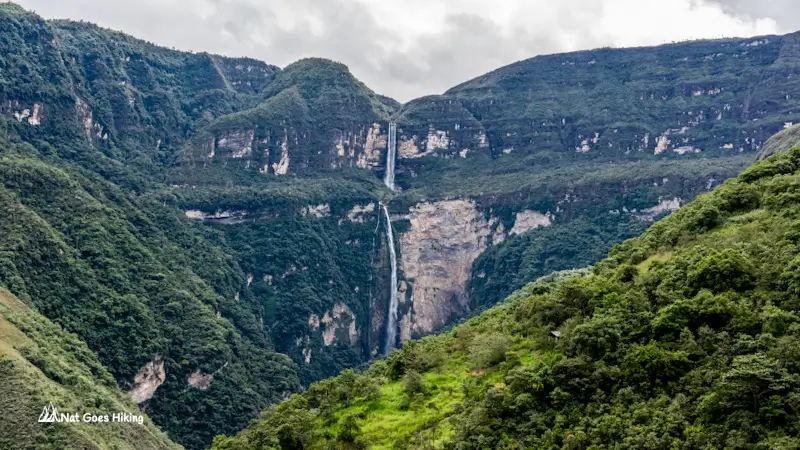
You can see Gocta Waterfall from the village of Cocachimba, but it’s only when you hike to the base that you realise how enormous it really is. Located in Peru’s Amazonas region near Chachapoyas, Gocta Falls drops 771 metres through the cloud forest, and the hike itself is a big part of the experience.
The Gocta Waterfall hike is an 11 km return trail from Cocachimba, taking 4–6 hours. You can do it independently (no guide needed) or join a day tour from Chachapoyas for around S/60.
We did the Gocta Waterfall hike in July 2025, taking the Cocachimba return route, the most popular way to the falls. Here’s everything we learned from our visit: route options, how hard the trail really is, entrance fees, whether a tour or going independently makes more sense, the best time to go, and what I’d do differently if we went back.
Quick Facts about Gocta Waterfall
Location
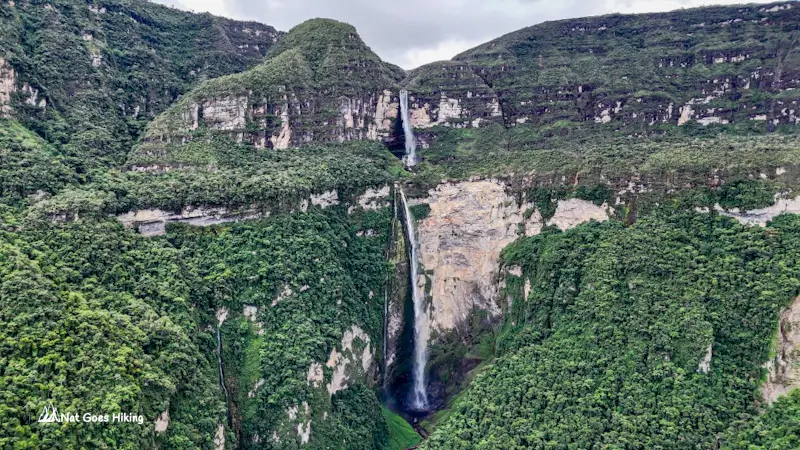
Gocta Waterfall (Catarata de Gocta) is located in Peru’s Amazonas region, within the cloud forest near the villages of Cocachimba and San Pablo. The nearest major town is Chachapoyas, about 43 km to the south.
When the world found out about it
Locals have known Gocta Waterfall for generations, long before it became known internationally in the mid-2000s. Gocta wasn’t some undiscovered secret waiting for an explorer to stumble onto it. The people of Cocachimba had always known about the falls, but according to local legend, they kept its location quiet because a mermaid living there was said to curse anyone who revealed her home.
German researcher Stefan Ziemendorff first spotted Gocta Waterfall from a distance while exploring sarcophagi and burial sites on the opposite side of the Utcubamba Valley. A few years later, he returned with a local guide and reached the waterfall. After measuring Gocta in 2006, he announced its height to the wider world, and the waterfall quickly gained international attention.
Height
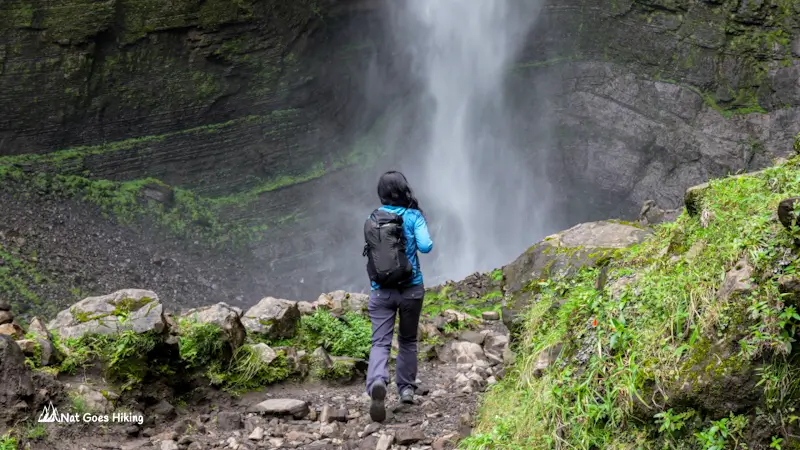
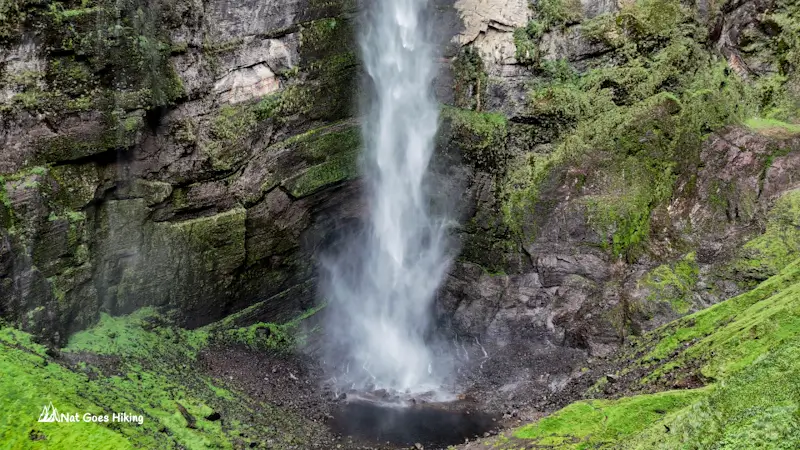
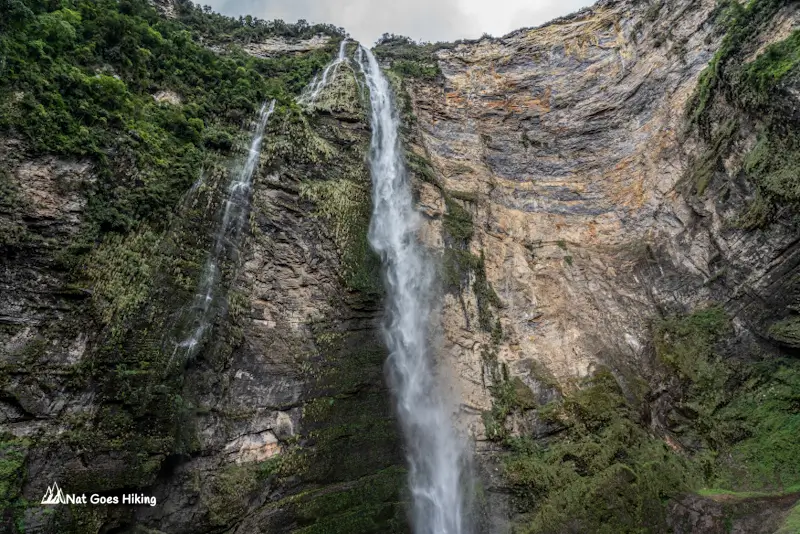
Gocta waterfall drops 771 metres in total, split into two main cascades: 231 metres for the first drop and 540 metres for the second.
After Ziemendorff measured Gocta, it was described as the third-tallest free-leaping waterfall in the world, behind Angel Falls in Venezuela and Tugela Falls in South Africa. However, waterfall rankings are complicated, and as more waterfalls were measured and different criteria were used, Gocta’s position changed. According to the World Waterfall Database, Gocta is now the world’s 18th-tallest waterfall.
Gocta Waterfall Hike: Route variations
Before you lace up your boots, it’s worth knowing that “the Gocta hike” isn’t actually one hike. There are two route variations.
Route 1: Cocachimba return (~10-11 km)
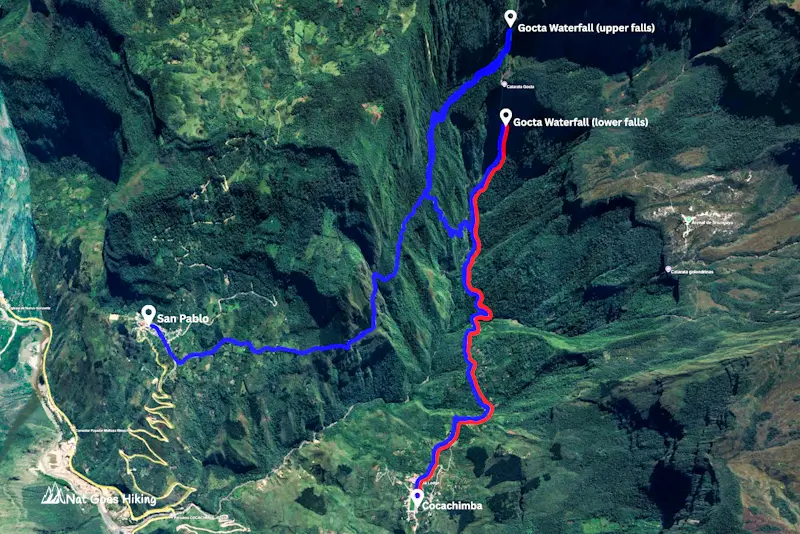
The Cocachimba return route is the one we did (red line on the map), and it’s the more popular option. For most visitors, this is the easiest option because it starts and finishes in the same village and avoids arranging transport between two trailheads. If you go on a tour, you will do this route. You start and finish in the village of Cocachimba, walking out to the base of the lower falls and retracing your steps back. It’s an out-and-back.
Route 2: San Pablo-Cocachimba Route (~18 km)
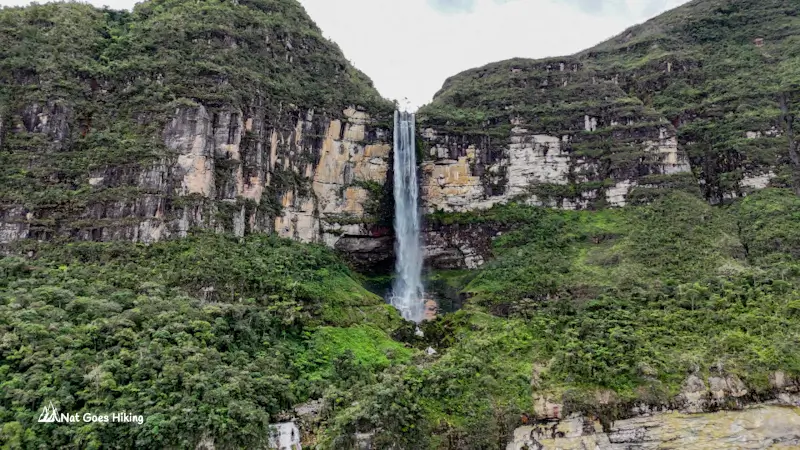
The San Pablo-Cocachimba Route (blue line on the map) starts in San Pablo, climbs to the upper falls, drops down to the lower falls, and then continues to Cocachimba. So you get to see both cascades rather than just the lower one. It’s about 5 km longer and involves more elevation change.
Gocta Waterfall Hike Details
We did the Cocachimba Gocta hike, so the details below focus on this route.
Gocta Waterfall Hike: Quick Overview
- Location: Northern Peru, Amazonas region, near Cocachimba (about 43 km by road from Chachapoyas)
- Trail type: Return / Day Hike
- Distance: 11.7 km / 7.3 mi return
- Hiking time: 4-6 hours
- Elevation gain: 542 m / 1,778 ft
- Elevation loss: 542 m / 1,778 ft
- Highest altitude: 1,904 m / 6,247 ft
- Starting and ending point: Cocachimba
- Entrance fee: S/15 (adult) as of July 2025
- Horses available: Yes, for about 2/3 of the route
- Best season: April-May are the sweet spot for a fuller waterfall and good hiking conditions
- Difficulty: Moderate
- Guide required: No
- Public transport to trailhead: Yes
My Gocta Waterfall Hike Experience
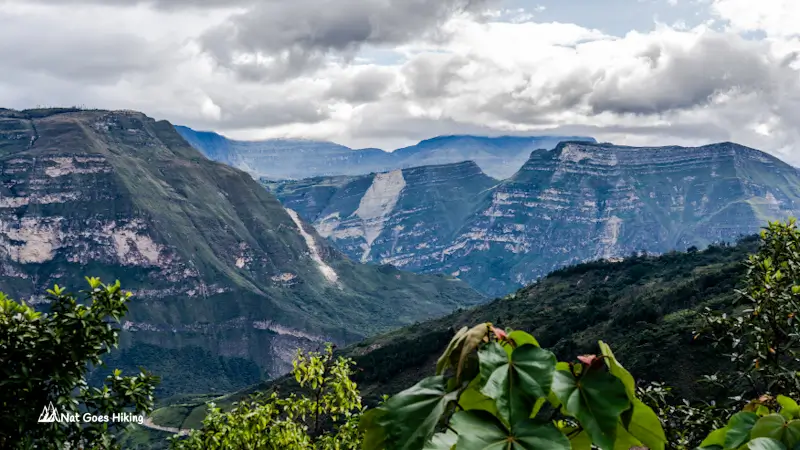
We started the Gocta Waterfall hike in Cocachimba. You can already see the waterfall from the village, and there’s a viewpoint right at the trailhead where you get your first proper look at Gocta before setting off.
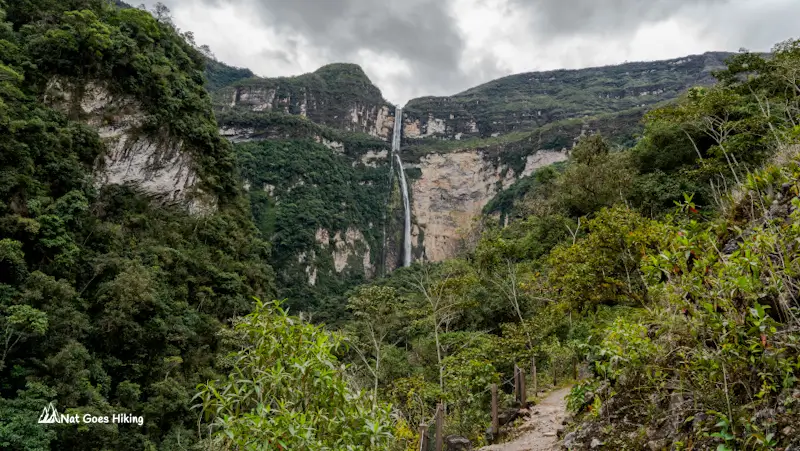
Our GPS clocked 11.7 km return, including almost an hour at the waterfall, it took us 4 hours 40 min. We reached the waterfall in about 1 hour 30 min, walking at a fairly steady pace and stopping only briefly for photos. But on the way back, we stopped more for photos and videos, and it took us about 2 hours 20 min to get back to the trailhead.
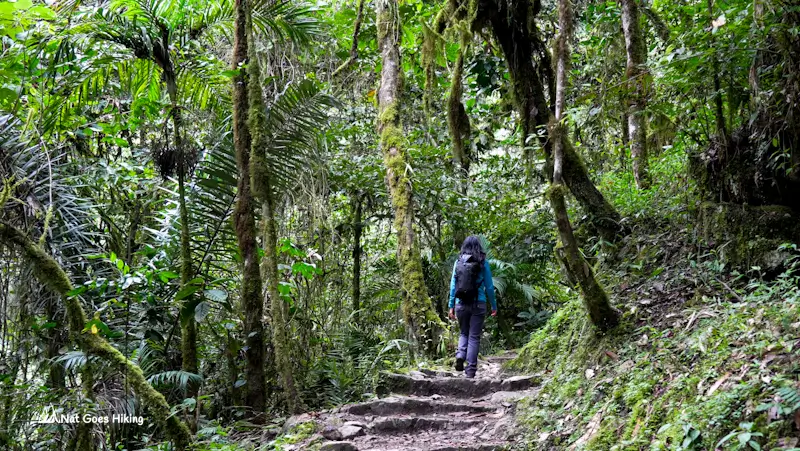
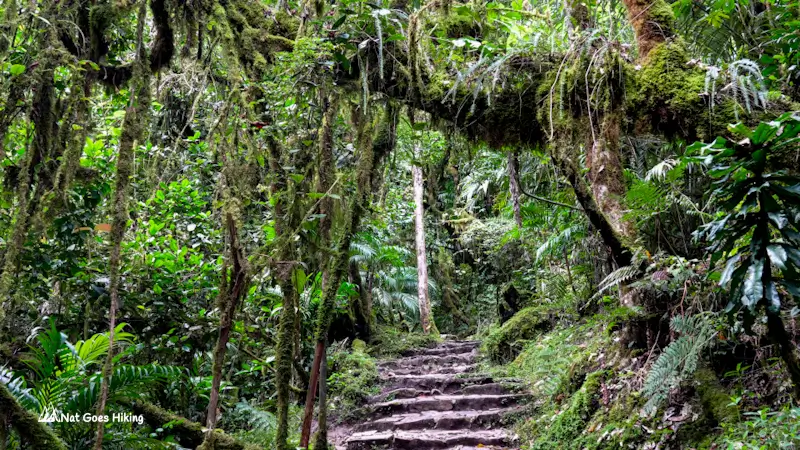
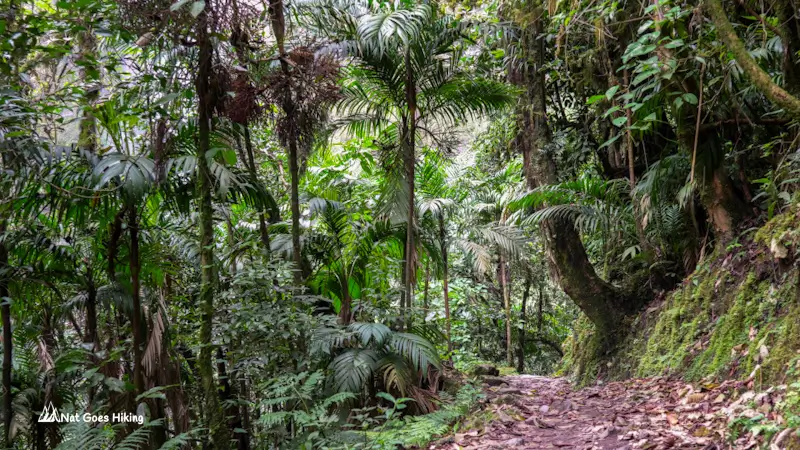
The trail winds through cloud forest and is generally well-maintained. It’s a mix of stone-paved and dirt sections with open viewpoints where you can actually see Gocta in the distance. It’s well marked and easy to follow, so it can be easily done without a guide.
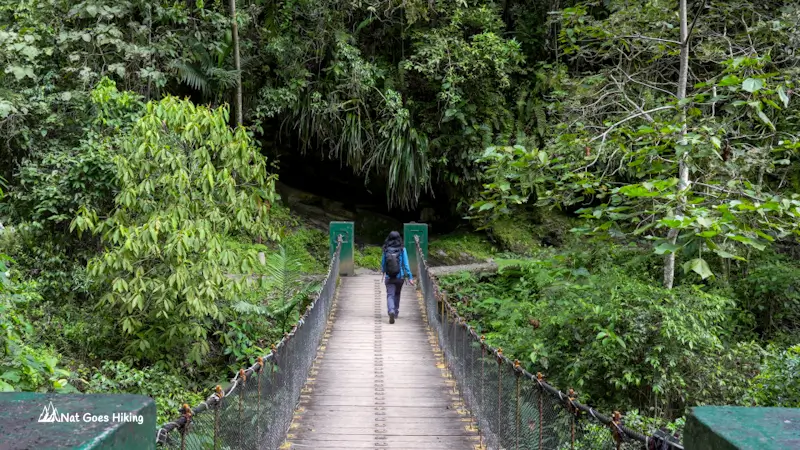
You start in Cocachimba at about 1,800 m, and the base of Gocta Waterfall is only slightly lower at around 1,770 m. That might make it sound like an easy downhill walk, but it isn’t. The trail keeps rolling up and down, and our GPS recorded around 542 m of cumulative elevation gain and the same amount of descent over the return hike.
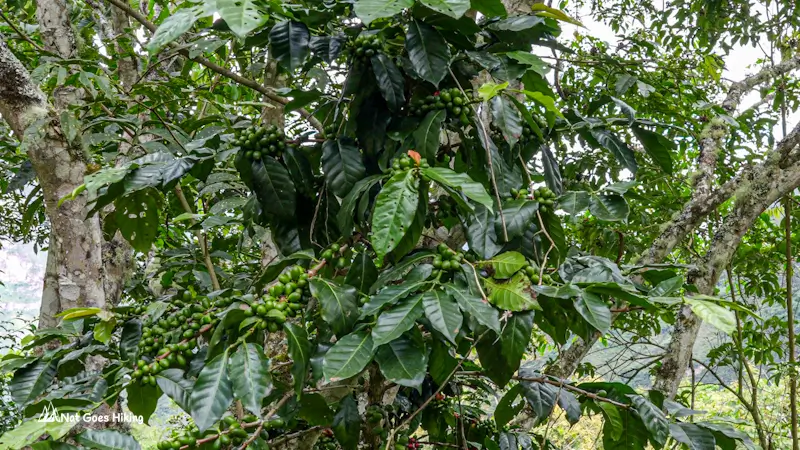
We were lucky with the conditions on the day we visited. The trail was dry, and we had mild, overcast weather with no harsh sun beating down on us.
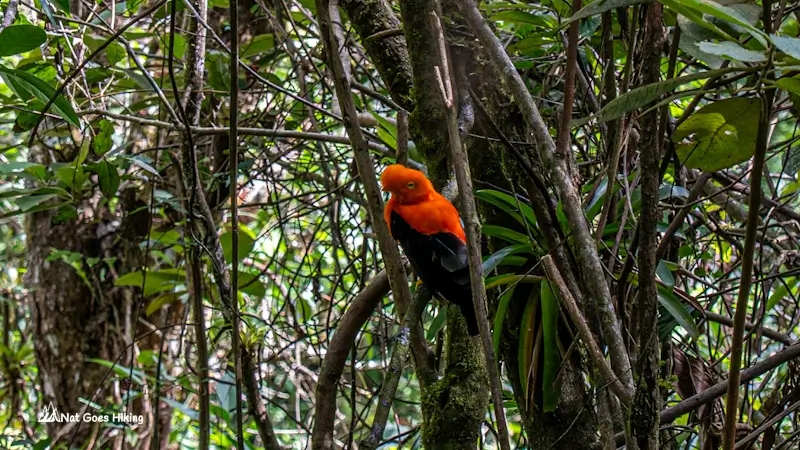
On the way back, we were lucky enough to spot the Andean cock-of-the-rock, Peru’s national bird. It was a pretty cool surprise, especially because it happened right near the wooden sign pointing out that they can sometimes be seen there.
Horses on the Gocta Waterfall Hike
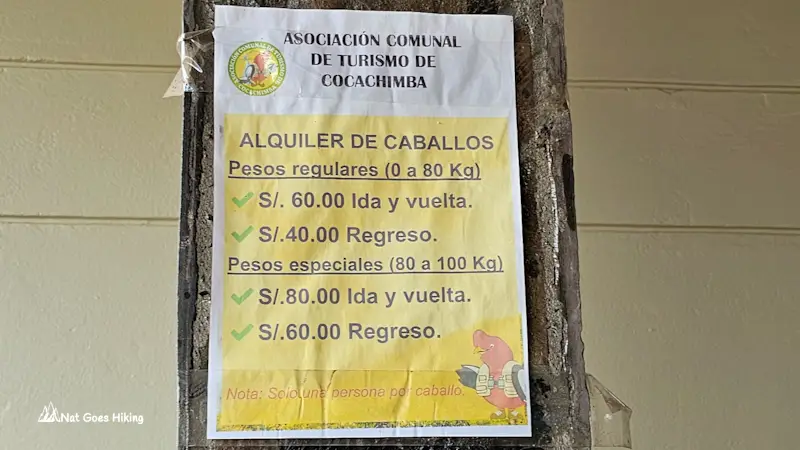
If you’d rather not walk the entire route, horses are available for about two-thirds of the trail, and you can request them at the information centre where you buy tickets in Cocachimba. The price is S/60 return trip if your weight is under 80 kg and S/80 if your weight is between 80 and 100 kg.
Is Gocta Waterfall Hike Difficult?
I’d rate the Gocta Waterfall hike as moderate. It’s not technically difficult, and overall, it’s a very pleasant walk through the cloud forest. The main challenge is the constant ups and downs rather than the altitude. On the way back, closer to the end of the trail, there is about 200 m of elevation gain, which is the hardest part of the hike. Coming after high-altitude hikes around Cusco, I found the elevation much easier here.
Gocta Waterfall tour: our experience
Booking the Gocta Waterfall tour in Chachapoyas
There are a handful of travel agencies around the Main Plaza in Chachapoyas, and most charge very similar prices. Only one quoted about 30% more than the others, so it’s worth checking a few agencies before booking. Most had price lists displayed on the wall inside the office. But when we spoke to the staff, they told us about promotions and offered us a cheaper deal instead.
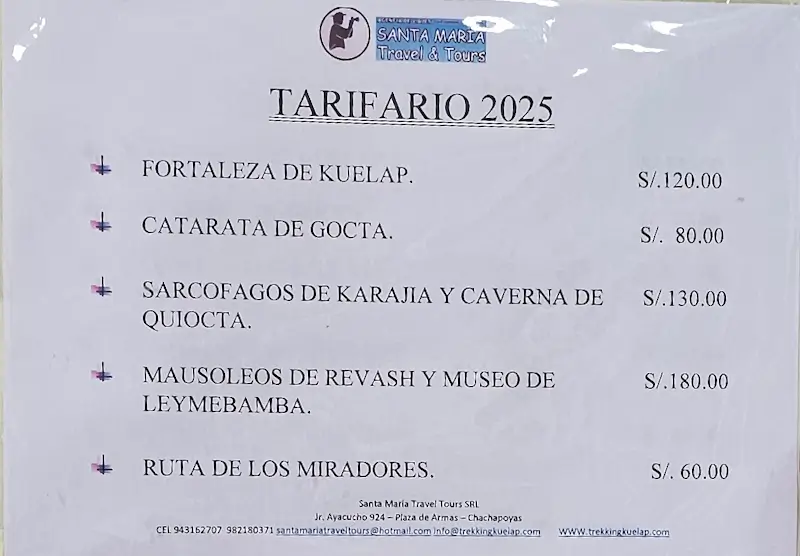
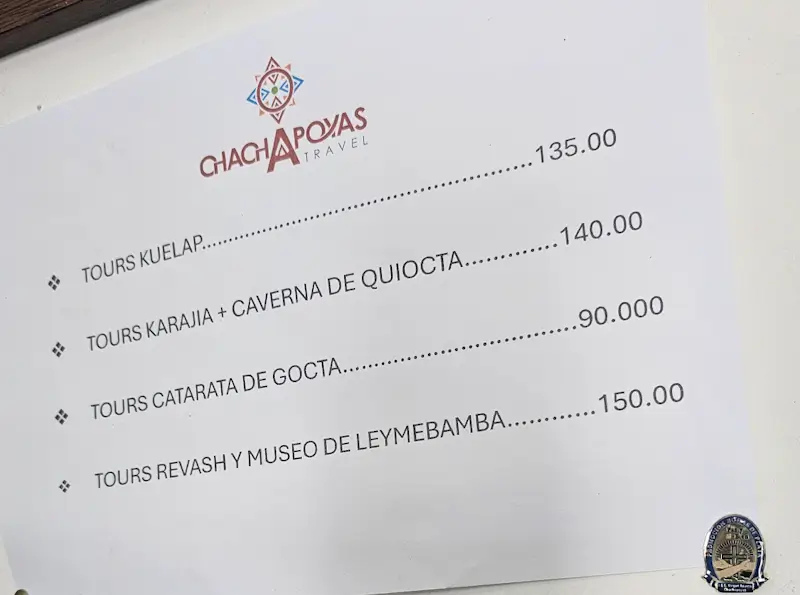
We ended up booking through Santa Maria Travel and Tours and paid S/60 each for the Gocta Waterfall tour (in July 2025). For S/60 (US$17.6) per person, we got:
- return transport from Chachapoyas
- a guide
- Gocta Waterfall entrance fee (S/15)
- lunch in Cocachimba (worth S/15 based on the restaurant menu)
Once you take out the entrance fee and lunch, you’re really paying about S/30 for the transport and guide, which felt like pretty good value.
The tour runs 9:30am to 6pm. You leave straight from the agency office, and from what we could tell, it wasn’t really “our agency” tour, more like several agencies pooling clients into one van. There were around 12 people altogether, travelling in a comfortable Mercedes-Benz Sprinter.
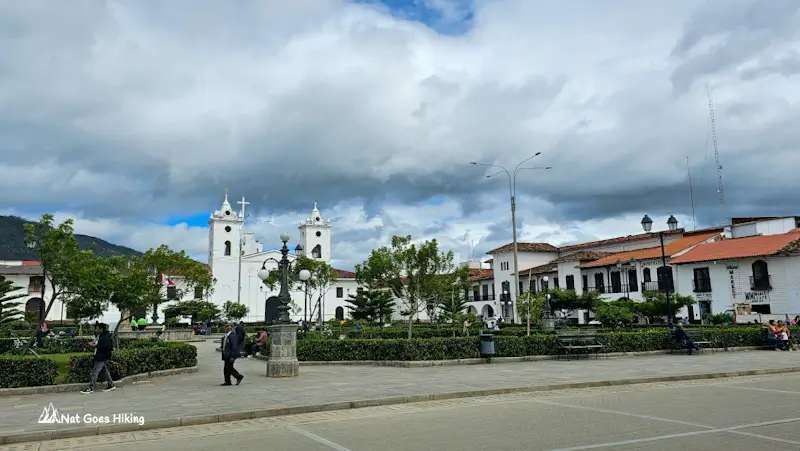
The drive to Cocachimba
Cocachimba is roughly 43 km from Chachapoyas, about 1 hour 15 min on the road. Once we reached Cocachimba, we went to a restaurant, where we sorted our lunch order and used the bathroom. After that, we headed to the ticket office, where our guide bought the Gocta Falls entry ticket for the group. If anyone needs a horse for part of the route, it should be booked at the ticket office.
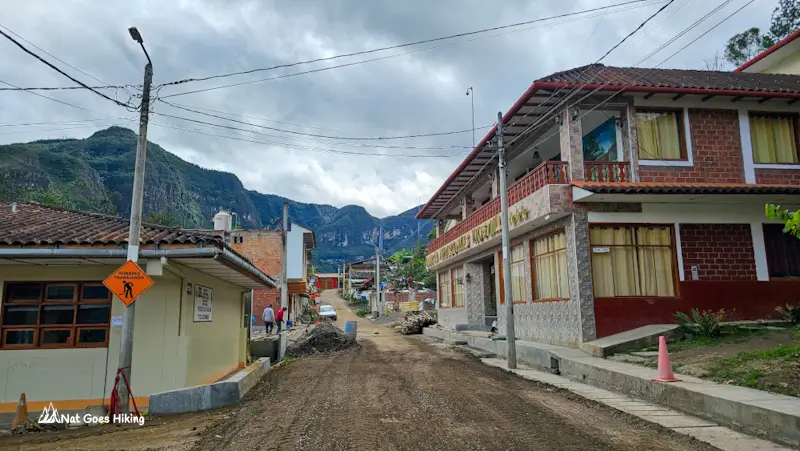
Hiking to Gocta Waterfall
By 11 am we were finally at the trailhead. The walk to the base of the second drop is about 5.5-5.8 km, and it took us around 1.5 hours to get there. Our guide stuck with the slowest walkers in the group the whole way, so I honestly don’t know if he was sharing any info about the waterfall or the area. That wasn’t an issue for us, but if you’re expecting a guided walk with lots of information along the way, it’s something to keep in mind. The trail itself was well-maintained, partly stone-paved, and clearly marked the whole way.
At the base of Gocta Falls
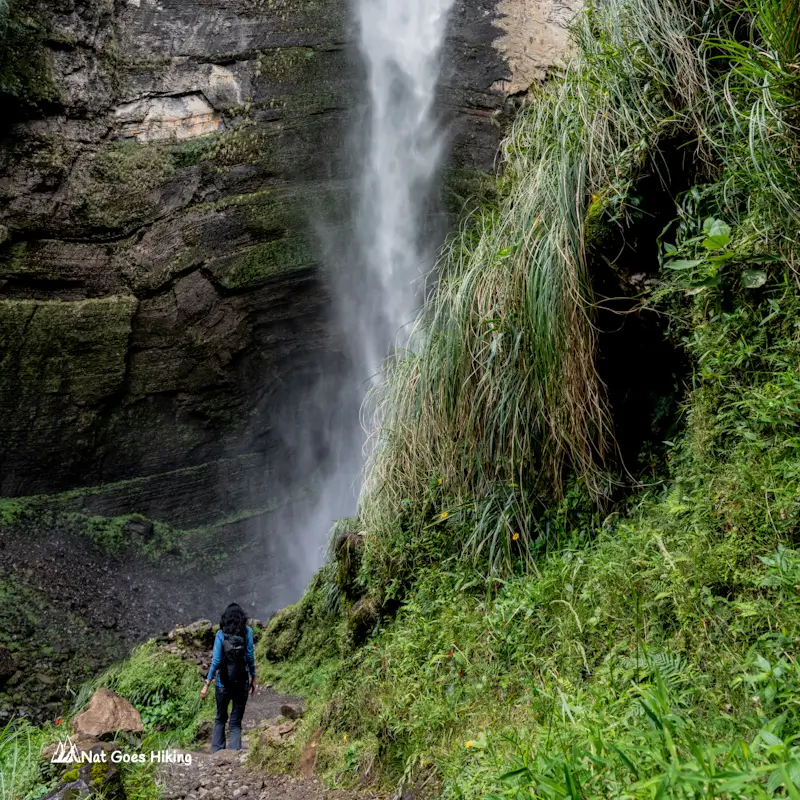
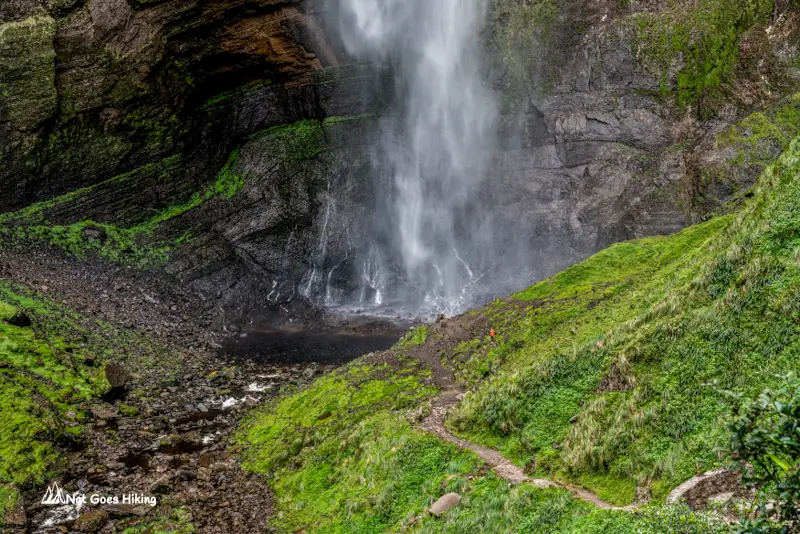
When we arrived at the base of Gocta Waterfall, there was one other tour group there. Even though we visited in early July 2025, one of the busiest months for tourism in Peru, it never felt crowded.
We ended up spending almost an hour at the waterfall. Most of that time disappeared taking photos, filming videos, and simply enjoying the impressive Gocta Falls. It’s hard to appreciate just how massive it is until you’re right underneath it.
The trip back
On the way back, we crossed paths with our guide and his group of stragglers, who told us to get to the restaurant and get started on lunch without waiting. We ordered pollo a la plancha (grilled chicken), and it was a decent-sized portion and of good quality. Most of our group trickled in not long after. But we then waited around 90 min for the last hikers before driving back to Chachapoyas. That was easily the biggest downside of joining a tour.
If you’re reasonably fit, you’ll probably finish well ahead of the slowest group, so expect some waiting before heading back to Chachapoyas.
Looking back, we’d happily pay S/60 again. The Gocta Waterfall tour was great value for money.
Was Gocta Waterfall Tour worth it?
Pros
- Inexpensive
- Transport organised
- Entrance fee included
- Lunch included
- Good for first-time visitors
Cons
- Fixed schedule
- Waiting for slower hikers
- Less flexibility
- Only Cocachimba return route available, unless it’s a private tour
Gocta Waterfall without a tour
If you’re comfortable travelling independently, visiting Gocta Waterfall without a tour is easy. You don’t need a guide, the trail is well marked, and public transport to the trailhead (both Cocachimba and San Pablo) is available.
For me, the biggest reason to skip tours is the flexibility. You can start hiking early, before most tour groups arrive, spend as much time as you like at the waterfall, and choose between two different routes depending on how much walking you want to do.
If I were visiting Gocta Falls again, I’d definitely skip the day tour and stay overnight in Cocachimba instead (something that didn’t occur to me when we were in Chachapoyas) and start the hike early in the morning. It would make an already incredible experience even better.
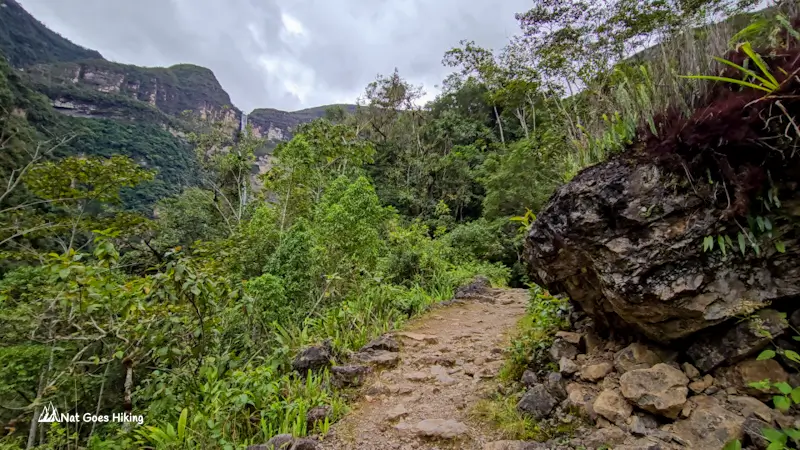
Gocta Waterfall Return Hike from Cocachimba
If the Cocachimba return route is your plan, grab a colectivo from Chachapoyas Terminal Terrestre heading toward Pedro Ruiz and ask the driver to drop you at Paradero Cocachimba-Gocta. That’s S/10 per person. From that stop, mototaxis run into Cocachimba itself for another S/10.
I was surprised by how many nice places there were to stay overnight. Many of them have views of Gocta Waterfall. The prices range anywhere from about $30 up to $200 plus a night, depending on what you’re after. Staying overnight means you can start the Gocta Waterfall hike early, before the day tours arrive.
Getting back is the same process in reverse, mototaxi to the paradero, then colectivo back to Chachapoyas.
San Pablo-Cocachimba Route
If you want to see both the upper and lower cascades of Gocta Waterfall, choose the San Pablo-Cocachimba Route.
This is a longer hike of around 18 km, starting in San Pablo and finishing in Cocachimba. Most hikers see the upper waterfall and then head down to the lower cascade. Going in this direction means less uphill walking overall, and it’s also much easier to find transport back from Cocachimba than from San Pablo.
Accommodation is available in San Pablo, although there are fewer options than in Cocachimba.
Getting there is similar. Take a colectivo from Chachapoyas towards Pedro Ruiz, get off at Paradero Cocachimba-Gocta, then continue by mototaxi to San Pablo.
Tour vs independent hike comparison
In most cases in Peru, doing day hikes instead of going on a day tour doesn’t save you money. Here’s a rough comparison for the Gocta Waterfall Hike for one person:
Gocta Waterfall Hike Cost Comparison: Independent vs Tour
| Expense | Independent | Tour |
|---|---|---|
| Transport | S/40 | Included |
| Entrance fee | S/15 | Included (S/15) * |
| Lunch | Extra | Included (S/15 value) |
| Total | S/55 (US$16.2) + lunch | S/60 (US$17.6) |
Note: Prices are based on our visit in July 2025 and may change over time. Independent transport costs are based on travelling from Chachapoyas using colectivos and mototaxis.
* Add additional S/15 entrance fee paid to San Pablo community if you do the complete San Pablo-Cocachimba route.
By the time you’ve paid for transport and the entrance fee, you’ve already spent about S/55. Add lunch, and the total is usually higher than the tour price.
For that reason, I’d recommend:
- Choose a tour if you’re short on time and staying in Chachapoyas.
- Go independently if you want more flexibility, plan to stay in Cocachimba, or want a quieter trail. If you are a fast hiker and want to avoid waiting for a large group.
For us, the tour was a good value and worked well. It was a convenient and inexpensive way to get to the trailhead.
Best Time to Visit Gocta Waterfall
There’s no bad time to visit Gocta Waterfall. It really comes down to what you want from the hike. Do you want to see the waterfall at its absolute best, or would you rather have an easier hike?
The best overall time to visit Gocta Waterfall: April to May
April and May are the sweet spot for visiting Gocta Falls.
This is when the rainy season starts to ease off. The waterfall is still incredibly powerful, but the heaviest rains have usually eased by then. The trail also begins to dry out, making the Gocta hike far more enjoyable than during the wettest months.
If you’re planning the Gocta Waterfall hike and want the best balance between scenery and hiking conditions, I’d aim for late April or May.
Gocta Waterfall at its biggest: October to March
During the rainy season, roughly from October to March, Gocta Waterfall is at its most spectacular. The volume of water increases significantly, creating a dramatic scene.
The downside is the trail conditions. Expect muddy and slippery sections, wet tree roots, and puddles. The path is well established, but it can become quite slick in places. Good hiking shoes are a must.
Rain usually comes in short bursts rather than lasting all day, but mountain weather is unpredictable. It’s worth packing a lightweight rain jacket, whatever the forecast says.
Best trail conditions: June to September
The dry season, from June to September, brings the easiest hiking conditions.
The trail is firmer, there’s almost no mud, and you’ll have a better chance of clear views along the walk. If hiking comfort is your priority, this is the best time to do the Gocta Falls hike.
But even in the dry season, cloud forest weather can change quickly. Don’t expect clear blue skies all day.
The trade-off is that Gocta Falls usually carries less water than during or just after the rainy season. When we visited in July, the falls were still quite full and powerful. It’s still an impressive sight, but it won’t have quite the same power as it does earlier in the year.
July and August are also the busiest months because they coincide with the Peruvian holiday season. Expect more people on the trail and at the viewpoints. We visited in early July and encountered only two international tourists on the trail. While there were some Peruvian visitors, the hike still felt peaceful.
Best time of day for the Gocta hike
If you’re visiting Gocta Waterfall independently, try to start as early as you can. An early morning start usually means fewer people on the trail and a quieter experience at the waterfall.
However, if you’re joining an organised tour, it’s out of your control because the departure time is fixed. Our tour didn’t leave Chachapoyas until after 9:30 am, and we reached the trailhead at around 11 am. Even though we visited during the busiest season, we didn’t see anyone outside our group until we reached Gocta Waterfall, and on the way back, there were more tourists heading to the falls.
Packing list for Gocta Waterfall Hike
The Gocta Waterfall hike isn’t especially high or particularly hot. The temperature is comfortable, but it’s humid. Pack for that reality, not for a sunny hike.
Footwear: Hiking shoes or boots. A good grip is a must, as the trail turns muddy and slippery after rain.
Clothes: Breathable, quick-drying clothes are the way to go. Light fleece or jumper for the cooler mornings and evenings.
Rain protection: A lightweight rain jacket is worth packing. Even if it doesn’t rain, you’ll get sprayed once you’re beneath Gocta Waterfall.
Sun protection: hat, sunnies, sunscreen. Even in the cloud forest and under cloud cover, the UV still gets through at this altitude.
Insect repellent: Cloud forest means bugs.
Drinks and snacks: Bring drinks and snacks from Chachapoyas, or pick some up in Cocachimba before the hike.
Cash: small notes for drinks and snacks in Cocachimba. If you go independently, you will need cash for entry fees, colectivo/mototaxi, meals and accommodation if you decide to stay overnight in Cocachimba or San Pablo.
Tissues /toilet paper.
Gocta Waterfall Hike FAQ
Most people do the Cocachimba return route, about 10-11km round trip, out and back to the base of the lower falls only. The other option starts in San Pablo and finishes in Cocachimba. It’s a roughly 18km hike, which takes you to the upper falls first, then down to the lower one, finishing in Cocachimba rather than back where you started. It’s a longer hike where you see both drops of the waterfall.
The Gocta Falls return hike from Cocachimba, done by most people, is a moderate hike. It’s not technical, no scrambling or exposure, but has some ups and downs. The total distance for the Cocachimba route sits around 11 km and takes most people 4 to 6 hours. The hike is mostly between 1,700 m and 1,900 m above sea level. If you’ve done any altitude hiking already, say around Cusco, this hike feels pretty manageable.
Absolutely. The trail is well marked, so you really don’t need a guide unless you specifically want someone explaining the local flora, birds, and history along the way. Going independent means you control your own start time, which matters more than you’d think.
It’s S/15 if you’re hiking from Cocachimba. The full San Pablo–Cocachimba route costs S/30 because you enter through two different communities.
Yes, but there isn’t a direct service. Grab a colectivo from Chachapoyas Terminal Terrestre heading to Pedro Ruiz (S/10) and ask to be dropped off at Paradero Cocachimba-Gocta, then a mototaxi (S/10) for the final stretch to Cocachimba.
Plenty, but mostly in Cocachimba. Options range from budget hospedajes up to more upscale places with waterfall views right from your room, and prices span a huge range depending on what you’re after. San Pablo has fewer options if you’re doing that route instead.
The short answer is yes. The longer answer is that I think the Gocta Waterfall hike is one of the best hikes in northern Peru. The trail combines beautiful cloud forest scenery with the reward of standing beneath the 771-metre (2,530-ft) Gocta Falls, one of the tallest waterfalls in the world. The waterfall’s sheer scale alone makes the hike worth the effort.
Yes, horses cover about two-thirds of the route from Cocachimba, with the final stretch on foot. The price is S/60 for a return trip if your weight is below 80 kg and S/80 if your weight is 80-100 kg. The horses can be requested at the Cocachimba ticket office.
No, neither village has an ATM. Chachapoyas is your last reliable place to withdraw cash before heading to Gocta Waterfall, so make sure you get enough there. Entry fees, colectivo and mototaxi fares, meals, drinks, and snacks are all paid for in cash.
Want more inspiration for travel in Peru? Check out these posts:
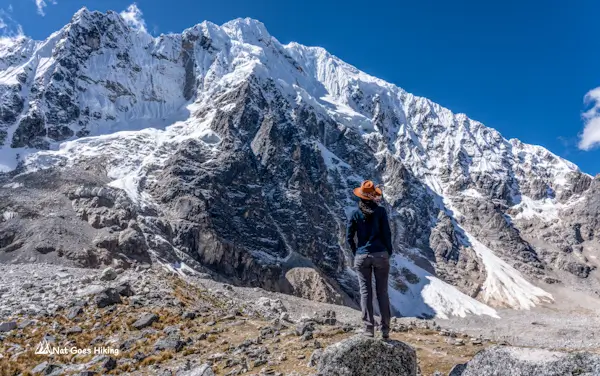
The Salkantay Trek is one of Peru’s best alternatives to the Inca Trail. In this guide, I break down each day on the trail, costs, difficulty, packing tips, and what it’s really like from my own experience hiking it.
Planning to visit Vinicunca Rainbow Mountain? Here’s how I avoided the crowds at Rainbow Mountain, plus tips on going independently from Cusco.
Looking for a quieter alternative to Vinicunca? Palccoyo offers multiple rainbow mountains, easier hiking, and far fewer crowds. Read my complete guide on how to visit without a tour.
Want more inspiration for travel in Peru? Discover Pallay Punchu, an off‑the‑beaten‑path alternative to Rainbow Mountain you can visit without a guide.
Seven colourful glacial lakes, views of Ausangate, alpacas roaming the valleys, and hot springs at the finish. We share our experience, costs, transport tips, and whether it’s worth doing without a tour.
Want to hike to Machu Picchu without a guide? Choquequirao Trek is a great alternative to the Inca Trail. Learn everything you need here.
Short on time for the full Huayhuash Circuit? This 4-day mini Huayhuash Trek without a guide still includes some of the trek’s most iconic views.
I hiked the Laguna 69 Hike in July 2025. Here’s what the photos don’t show: trail conditions, crowd levels, new 2026 access rules, costs, and more.
Planning hiking in Huaraz? Find the best day hikes and multi-day treks near Huaraz, including Laguna 69, Parón, Santa Cruz and Huayhuash with practical travel tips.
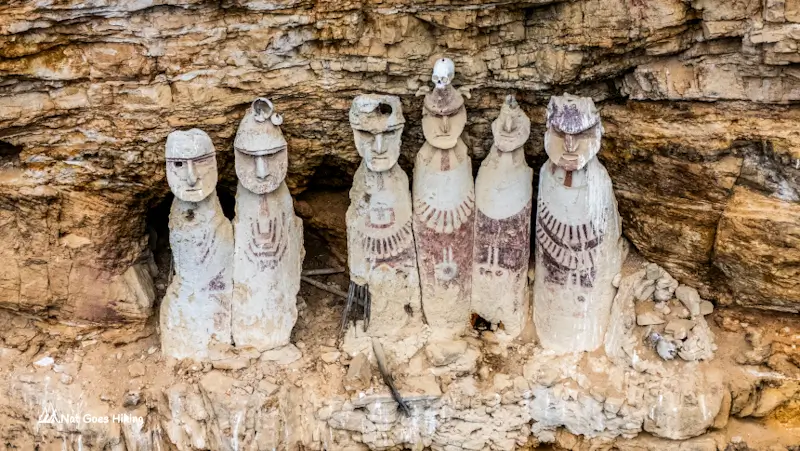
Discover Karajia Sarcophagi in Peru without a tour. My guide covers how to get there by public transport, costs, what to expect, and tips for visiting.